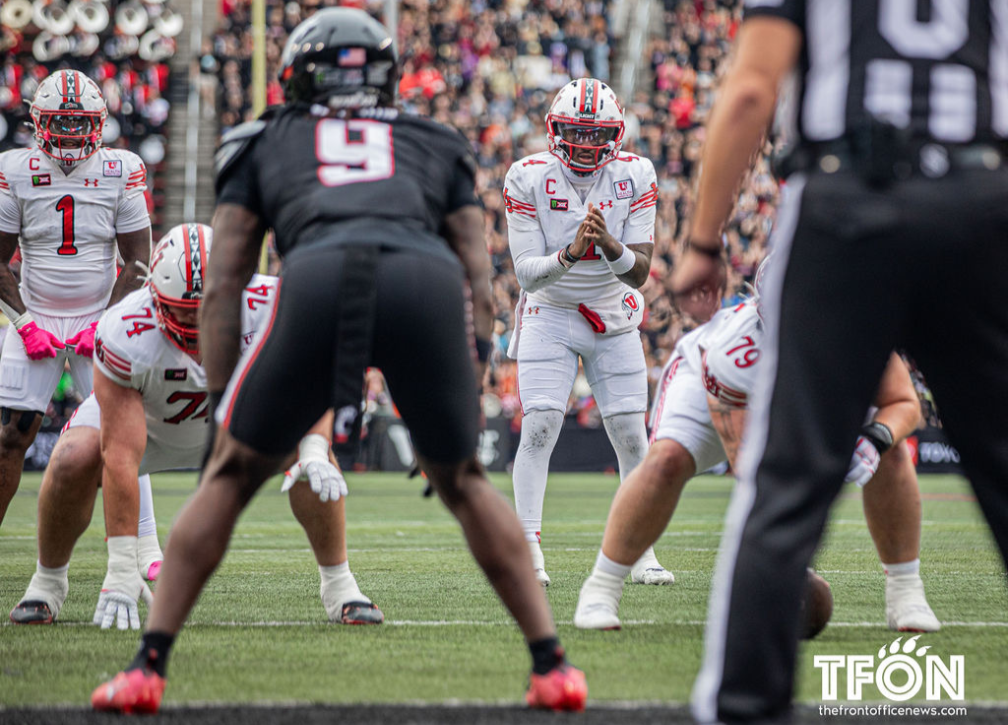
Coming off one of its biggest wins of the season against Texas Tech, Cincinnati had an opportunity to build on that momentum and further establish itself as a contender in the Big 12. Instead, the Bearcats suffered a humbling 49-25 loss to No. 10 Utah on Saturday at Nippert Stadium, putting together a performance that fell well short of expectations. Cincinnati was thoroughly outplayed in the first half, trailing 42-6 at the break, and while a better second-half effort provided a few positives, the game was never truly in doubt. From defensive breakdowns and missed tackles to costly offensive mistakes and missed opportunities, the loss exposed several areas of concern for a Bearcats team that will need to regroup quickly with another tough matchup against Houston looming.
"We knew Utah was a good football team coming in, and they certainly played like it there in the first half," Cincinnati head coach Scott Satterfield said following the game.
Here are the key takeaways from Cincinnati's disappointing loss to Utah.
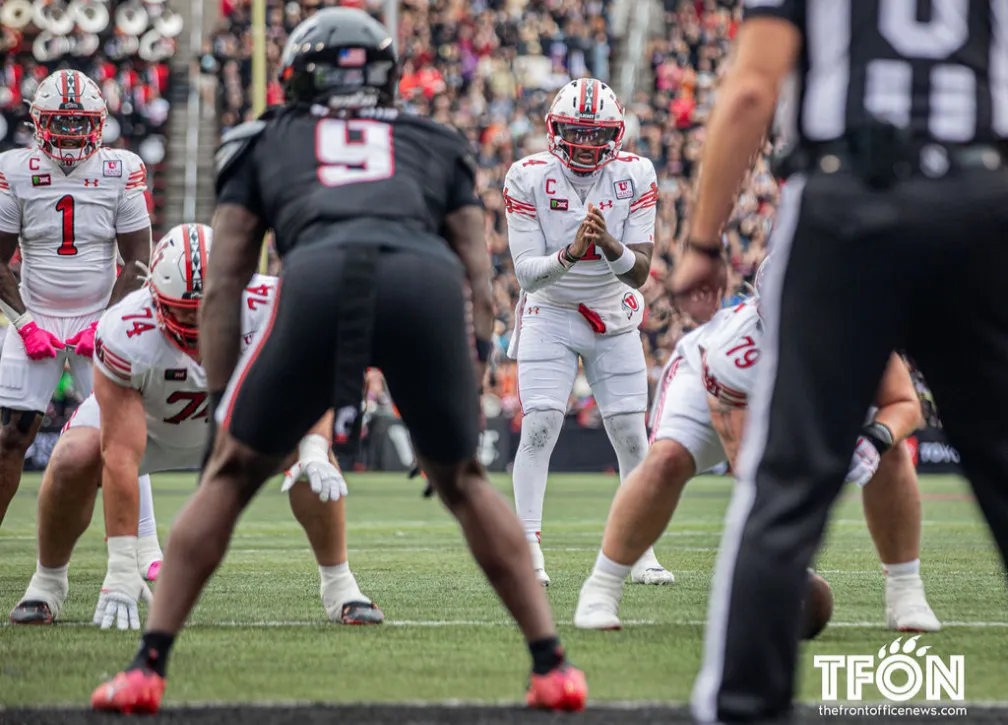
Cincinnati's slow start proved too much to overcome.
Coming off an impressive win over Texas Tech, the Bearcats delivered a disappointing performance against Utah, falling behind 42-6 by halftime in a game that was never particularly competitive. The Utes dominated the opening half on both sides of the ball, scoring on six of their first seven possessions and building a 36-point advantage. Cincinnati showed some fight after the break, outscoring Utah 19-7 in the second half, but the damage had already been done. Head coach Scott Satterfield acknowledged the difficulty of facing a team like Utah when his own team isn't playing well. "If you don't play well against a top 10 team like Utah is, I mean, this is what happens," Satterfield said. Against an opponent of that caliber, the Bearcats simply couldn't afford such a poor start.
The defense had no answers for Utah's physical rushing attack.
Cincinnati struggled to contain the Utes, allowing 268 rushing yards on 42 attempts (6.4 yards per carry) and 534 total yards. Utah running back Wayshawn Parker ran for 88 yards and a touchdown, while Devon Dampier and Daniel Bray also found success on the ground. The Bearcats particularly struggled with tackling and gap discipline, allowing Utah to consistently generate explosive plays. The Utes converted seven of 11 third-down opportunities, including their first six of the game, and controlled possession for 35:30 compared to Cincinnati's 24:30. Satterfield pointed to the inability to get off the field as a major problem. "I think they were six-for-six on third downs in the first half, and when they're staying on the field and keeping the drives alive, it was difficult for us to get off the field at that point in time." Linebacker Jonathan Thompson also acknowledged the defensive breakdowns, saying, "We got to fit the ball better. We got to tackle better. We got to play our jobs better because we had some missed tackles."
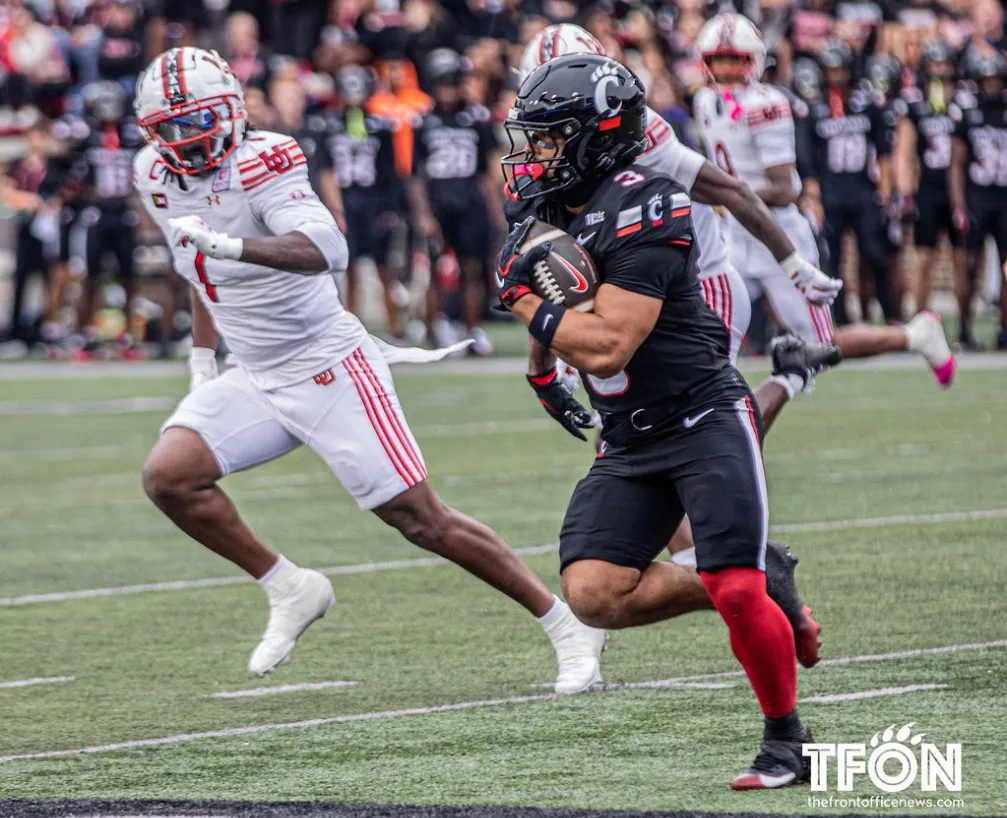
Cole Tabb continued to be a bright spot in an otherwise disappointing offensive performance.
The running back rushed for 131 yards on just 14 carries, averaging 9.4 yards per attempt, and recorded his third consecutive 100-yard rushing game. His 48-yard touchdown in the third quarter was his 10th rushing score of the season and third rushing touchdown of at least 40 yards. Tabb was one of the few consistent sources of positive momentum for Cincinnati, but his production wasn't enough to make up for an offense that struggled to finish drives and put points on the board early. JC French added a rushing touchdown in the fourth quarter, his seventh of the season, while JV Gibson led the receiving corps with five catches for 76 yards. Malachi Henry also provided an explosive moment with a 62-yard reception. French believed there were positives to take away from the offensive performance despite the result, saying, "I thought we moved the ball pretty well tonight overall. Obviously, we hurt ourselves a lot. I missed a few that I wish I had back."
Offensive mistakes and missed opportunities made an uphill battle even steeper.
Cincinnati actually finished with 456 total yards, only 78 fewer than Utah, but the yardage advantage was misleading given how the game unfolded. The Bearcats struggled to turn offensive production into points, particularly in the first half. Penalties, missed opportunities near the goal line and an unsuccessful field-goal attempt contributed to empty possessions when Cincinnati needed to find a way to stay within striking distance. The Bearcats finished just 3-of-11 on third down and converted two of three red-zone opportunities, compared to Utah's three touchdowns on five trips. Satterfield specifically pointed to the team's inability to capitalize on scoring opportunities. "If you get an opportunity when you get down close to the goal line, you got to punch it in and get touchdowns." French completed 16 of 30 passes for 263 yards but acknowledged that he left plays on the field. Against an opponent as talented as Utah, Cincinnati couldn't afford to repeatedly shoot itself in the foot.
A few defensive highlights provided some encouragement, but they came far too late.
Cornerback Jacob Finley delivered Cincinnati's biggest defensive play of the afternoon, returning an interception 79 yards for a touchdown in the third quarter. It was the Bearcats' first defensive touchdown of the season and the longest pick-six in the Big 12 this year. Finley also led the team with a season-high 10 tackles. Patrick Bauer added a forced fumble and recovery in the fourth quarter, and Cincinnati came up with two fourth-down stops, including a goal-line stand on fourth-and-one late in the game. Those plays helped the defense settle down after a disastrous first half, but they couldn't erase the struggles that put the Bearcats in such a deep hole. Satterfield praised the defensive response, particularly the team's ability to keep competing when the outcome was largely decided. "I thought our defense did an excellent job" in the second half, he said, pointing to the turnovers and fourth-down stops as positives.
The second-half response was encouraging, but Cincinnati needs more consistency.
Head coach Scott Satterfield praised his team's ability to keep competing after halftime, noting that it would have been easy for the players to hang their heads after falling behind by 36 points. Cincinnati outscored Utah 19-7 after the break and showed some improvement defensively, forcing turnovers and getting off the field on fourth down. "The fight is really easy to hang your head and feel sorry for yourself in the second half, and to come out there and just, you know, let them have it," Satterfield said. "But I thought our guys came out and showed some great fight with the way they came back." Still, the response shouldn't overshadow the tackling issues, missed assignments and offensive miscues that allowed Utah to take complete control. Thompson said the team needs to use the loss as a learning opportunity, adding, "We just got to learn from that. Watch film and just build."
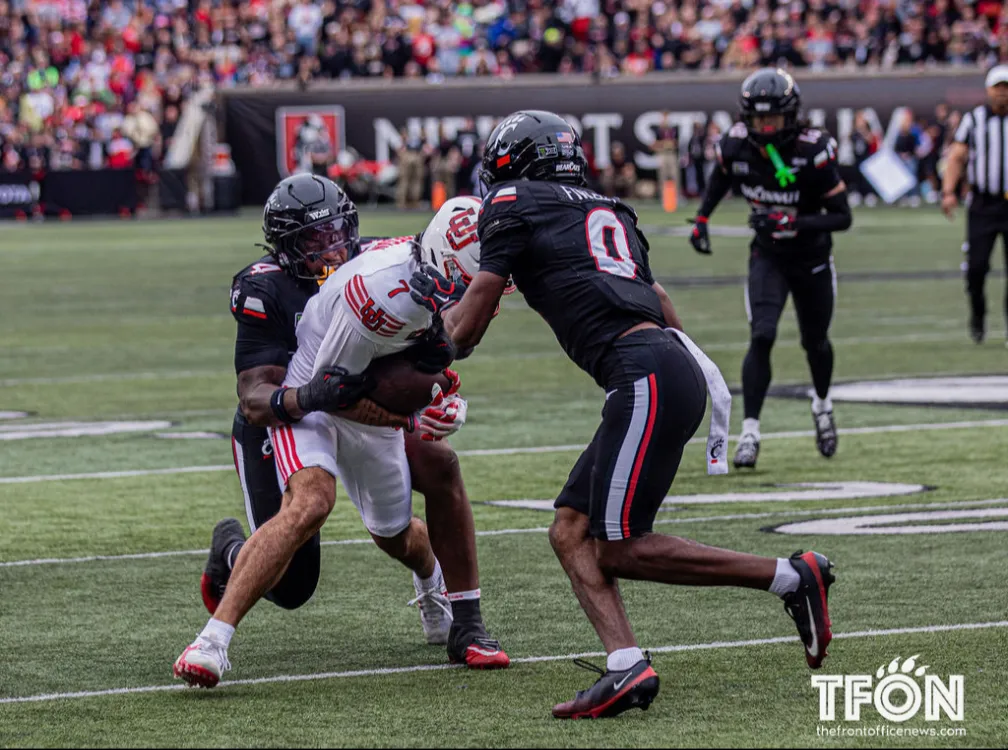
The loss is a significant setback with another major challenge waiting.
Saturday's result was particularly disappointing given the momentum Cincinnati carried into the matchup after its win over Texas Tech. The Bearcats had an opportunity to build on that performance and establish themselves as a legitimate contender in the Big 12, but instead suffered a 24-point defeat that exposed some significant weaknesses. The challenge doesn't get any easier next week, with Cincinnati heading to Houston to face another highly ranked opponent. Satterfield acknowledged the difficulty of the matchup, saying, "Another top 15 team in the country coming in that we have to go play next week." French, meanwhile, emphasized the team's belief that it can compete with anyone, despite Saturday's result. "I think we can compete with anybody in this conference and country," French said. "That is just something we have to hold ourselves to, keep moving forward and bounce back next game." Cincinnati will need to turn that belief into a much more complete performance, particularly defensively, if it hopes to avoid another disappointing result. Final Thoughts
Cincinnati's 49-25 loss to Utah was a disappointing reality check for a Bearcats team that entered Saturday riding high after its statement win over Texas Tech. The gap between the two teams was evident from the opening kickoff, as Utah dominated the first half, exposed Cincinnati's defensive weaknesses and took advantage of the Bearcats' inability to capitalize on offensive opportunities. Falling behind 42-6 at halftime left little room for a comeback, and while Cincinnati showed some fight in the second half, the result was never really in question.
There were positives to take away, particularly Cole Tabb's continued emergence as a reliable offensive weapon, Jacob Finley's 79-yard pick-six and the defense's improved effort after halftime. Tabb's third consecutive 100-yard rushing performance and Cincinnati's ability to force turnovers showed that there are still plenty of pieces capable of making an impact. However, those individual performances were overshadowed by the team's struggles to tackle, stop the run, get off the field on third down and finish offensive drives.
Perhaps the biggest concern is how dramatically different Cincinnati looked from the team that defeated Texas Tech just a week earlier. Satterfield said he felt good about the team's preparation entering the matchup, making the lackluster first-half performance even more frustrating. As he acknowledged after the game, "We didn't play well," and against a top-10 opponent, the consequences were evident.
The Bearcats don't have much time to dwell on the loss, with another difficult test awaiting next week against Houston. Saturday's defeat shouldn't erase what Cincinnati accomplished against Texas Tech, but it does serve as a reminder that this team still has plenty to clean up if it wants to compete consistently with the best in the Big 12. The second-half response was encouraging, but moral victories won't be enough moving forward. Cincinnati needs to carry that sense of urgency into a full 60-minute performance in Houston, because another slow start could produce a similar result.