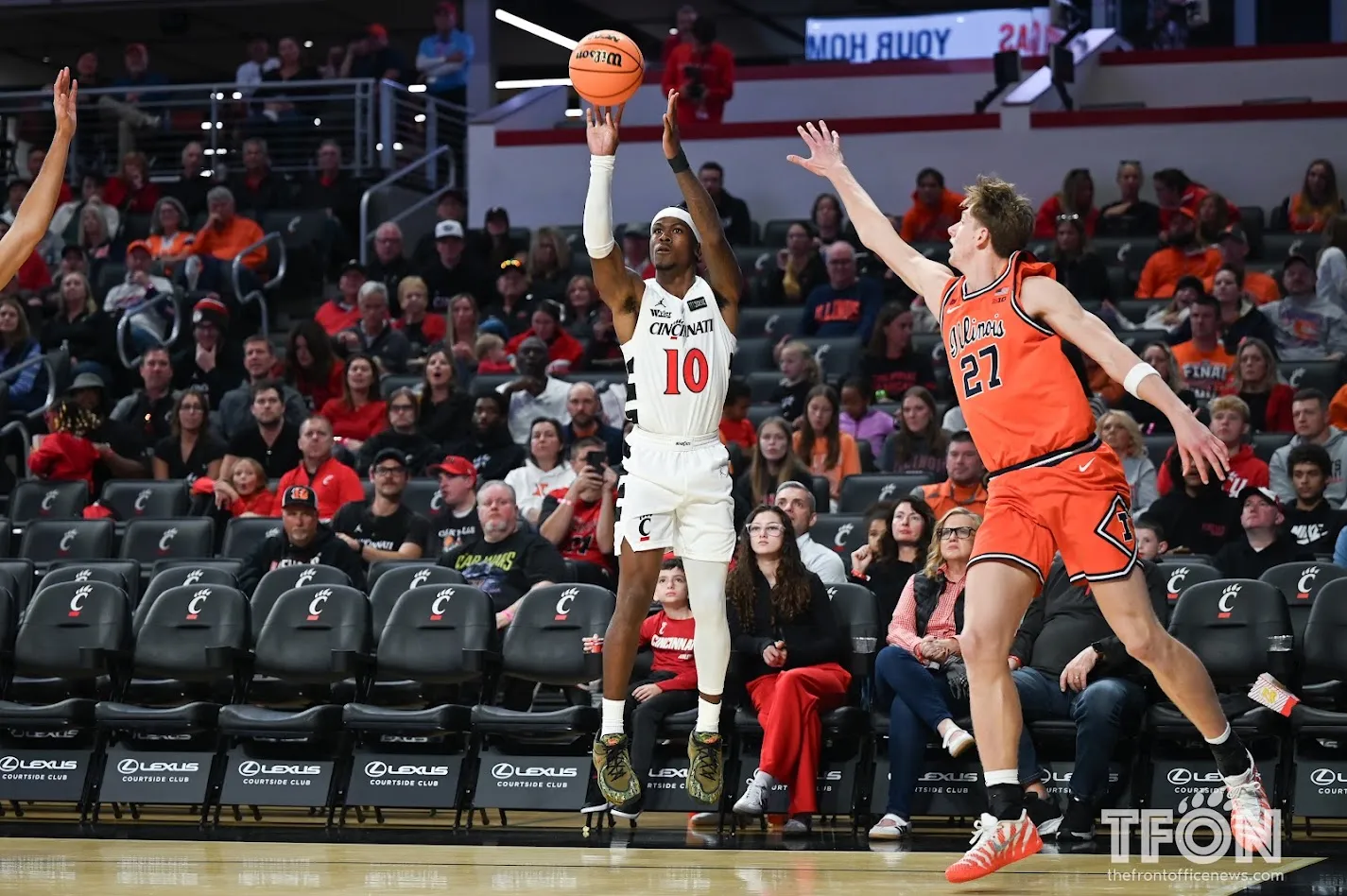
Five Key Takeaways: Illinois 105 Cincinnati 96
Five Key Takeaways from Cincinnati's 105-96 loss to Illinois: Tylen Riley Shines, but Bearcats Can't Finish the Comeback
Cincinnati showed it could compete offensively with a preseason top-five Illinois team, but the Bearcats ultimately came up short in a 105–96 exhibition loss Saturday at Fifth Third Arena. Behind a spectacular performance from Tylen Riley, who finished with a game-high 31 points and 13 assists, Cincinnati repeatedly fought its way back into contention. However, Illinois’ perimeter shooting, balanced scoring attack and ability to answer Cincinnati’s runs proved decisive.
The Bearcats shot 48.0% from the field and made 12 three-pointers, respectable numbers against a high-level opponent. Illinois was even more efficient, shooting 52.9% overall and knocking down 14 threes. Six Illini reached double figures, led by Andrej Stojakovic’s 24 points, while Quentin Coleman contributed 14 points, eight assists and seven rebounds.
For the Bearcats, Adlan Elamin added 15 points and Tyler Tejada scored 13, but the Bearcats could not overcome Illinois’ offensive firepower. The game featured multiple lead changes, several significant scoring runs and a late Cincinnati push that briefly threatened to make things interesting again.
After the game, head coach Jerrod Calhoun acknowledged both the promise of Cincinnati’s performance and the areas that need improvement. He described the exhibition as a valuable learning opportunity, particularly against a team capable of exposing defensive mistakes.
"These exhibition games are great learning tools, not only for the players but ourselves. And to play a Final Four team in Illinois, the relationship that I’ve developed with Brad (Underwood) and his son, Tyler, I think Tyler’s one of the best up-and-coming offensive minds. He and I share a lot of ideas. So, great game, and we’ll learn a lot from this." Here are five key takeaways from Cincinnati’s loss, with a closer look at how the game unfolded and what the Bearcats can learn from the performance.
1. Tylen Riley established himself as Cincinnati’s offensive centerpiece
If Cincinnati needed evidence that Riley could shoulder a substantial offensive burden against elite competition, this exhibition provided it. The Bearcats’ guard finished with 31 points, 13 assists, five rebounds and three steals, producing one of the most complete individual performances of the game. He scored efficiently, created opportunities for his teammates and repeatedly gave Cincinnati a way back into the game when Illinois appeared ready to pull away.
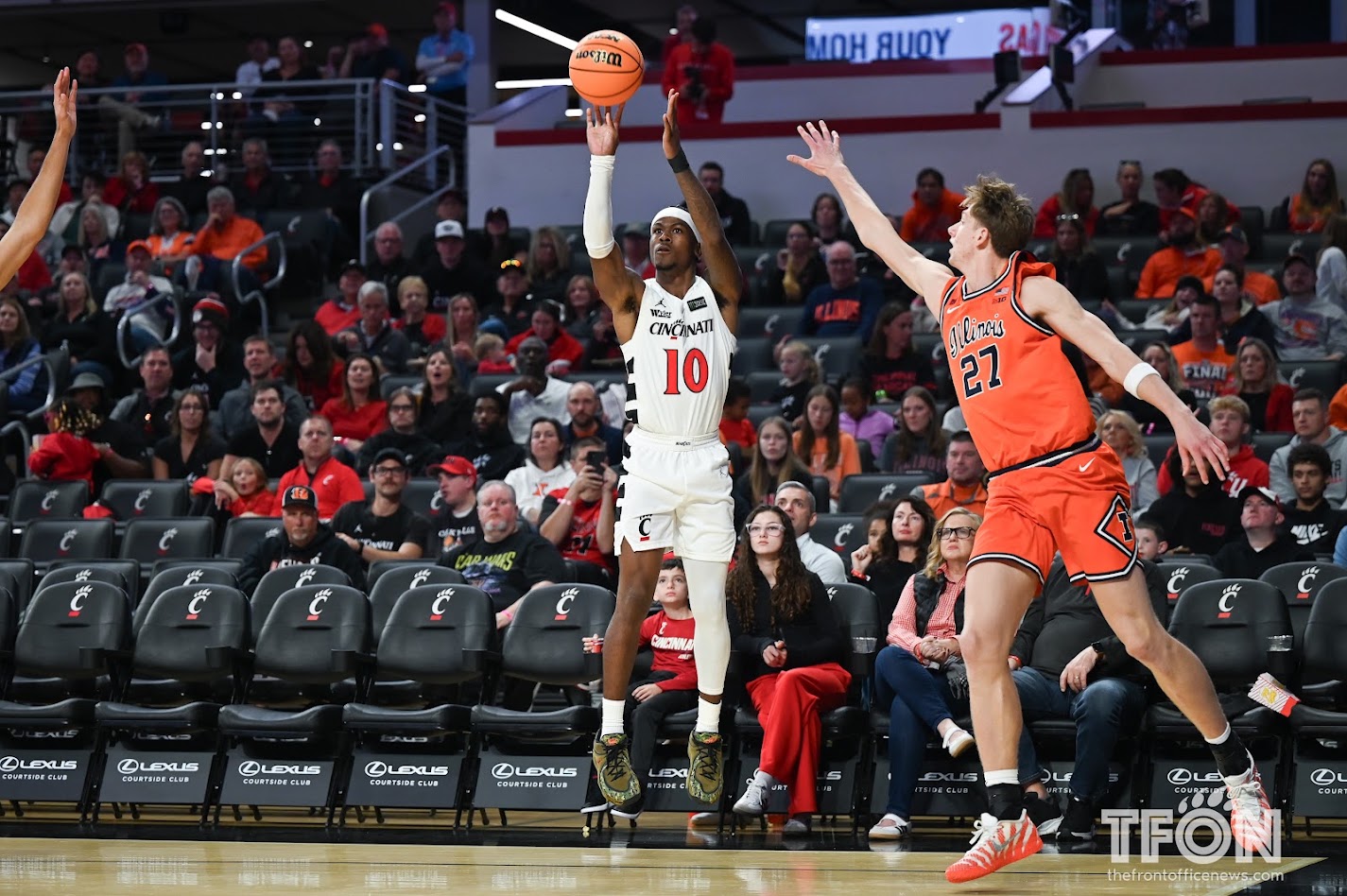
Riley’s influence was evident from the opening half. Illinois began the afternoon with a 13–6 advantage, using its early offensive rhythm to put Cincinnati on its' heels. The Bearcats responded with seven points in their next eight possessions', closing the gap to 14–13 after Myles Colvin’s layup with 14:25 remaining in the half.
After Illinois rebuilt its advantage, Cincinnati countered with another response. The Bearcats eventually moved in front 29–28 with 8:54 left before halftime, with Riley and Jayden Hastings each contributing four points during the eight-point run that put Cincinnati ahead for the first time.
Riley continued to provide an answer when the Illini took control. Cincinnati held a 37–33 lead following an MJ Collins Jr. basket at the 6:31 mark, but Illinois responded with a 12–0 run that turned a four-point deficit into a 45–37 advantage. Riley ended that stretch with a jumper at the 4:06 mark, preventing Illinois from extending its run further.
When the Illini later pushed the margin to 49–39, Riley took over during Cincinnati’s final offensive surge before halftime. He scored the Bearcats’ last five points of the half, helping reduce the deficit to 54–49. He entered the break with 16 points and six assists, serving as both Cincinnati’s leading scorer and primary playmaker.
His importance became even clearer after halftime. With Illinois leading 75–66 at the 11:53 mark, Cincinnati began chipping away again. David Iweze threw down a dunk, Riley Allenspach followed with a three-pointer, and the Bearcats had reduced the deficit to 75–71 around the midway point of the second half. Riley then made two free throws to bring Cincinnati within two points with 9:18 remaining.
That sequence demonstrated Riley’s ability to influence the game in several ways. He could score from the perimeter, attack the basket, convert from the foul line and create openings for teammates. His 13 assists were particularly important because they showed that Cincinnati did not have to rely on him to finish every possession himself.
Asked what made the game feel so comfortable offensively, Riley pointed to the quality of the players around him.
“When you just play with a lot of good players, which is what we have on this team, the floor just opens up,” Riley said. “It was just my night tonight. And, like I said before, it could just be anybody’s night.”
Riley added that having multiple capable offensive players creates the spacing necessary to make decisions and attack effectively.
But the final stretch also illustrated the limitations of relying so heavily on one player. Illinois responded to Cincinnati’s push, and the Bearcats eventually fell behind by 14 points. Even Riley’s late-game influence could not erase the deficit completely.
2. Illinois repeatedly answered Cincinnati’s scoring runs, and the decisive difference was how each team handled momentum
The game’s defining pattern was not that Cincinnati failed to compete. It was that the Bearcats repeatedly fought back, only for Illinois to produce another timely response.
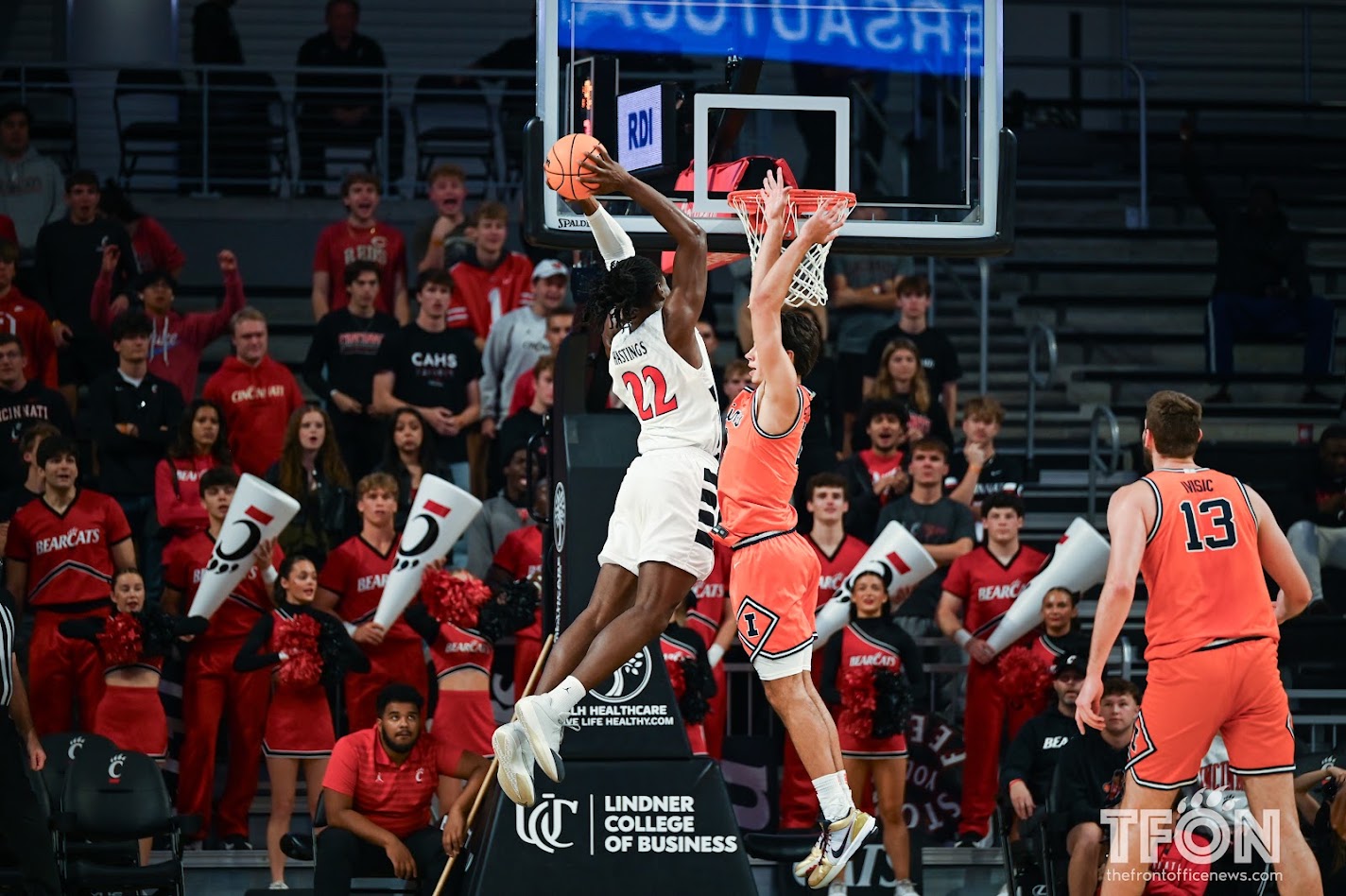
Cincinnati demonstrated early that it could recover from a deficit. After falling behind 13–6, the Bearcats pulled within one point at 14–13. Illinois then pushed its advantage to 28–21 following Stefan Vaaks’ three-point play at the 10:11 mark, but Cincinnati responded with eight consecutive points to take a 29–28 lead.
That sequence was important because it showed Cincinnati could score in bunches without requiring a lengthy stretch of one-player heroics. Hastings contributed four points, Riley added four, and the Bearcats turned a seven-point deficit into their first lead.
Cincinnati then extended its advantage to 37–33 on a Collins basket with 6:31 remaining in the half. At that point, the Bearcats had weathered Illinois’ early runs and positioned themselves to carry a lead into halftime.
Instead, the Illini produced the first major turning point of the game.
Illinois scored 12 unanswered points, taking an eight-point lead at 45–37. The run exposed Cincinnati’s difficulty in stopping an opponent once its offense found a rhythm. Riley’s jumper halted the streak, but Illinois continued to capitalize offensively and eventually reached a 10-point advantage at 49–39.
Riley’s late scoring helped Cincinnati recover enough to make the halftime score 54–49. The Bearcats had survived the most damaging portion of the first half, but the Illini had still managed to turn a four-point Cincinnati lead into a five-point halftime advantage.
The second half followed a similar pattern.
Illinois stretched the margin to nine at 75–66 with 11:53 remaining. Cincinnati responded through David Iweze’s dunk, Allenspach’s three-pointer and Riley’s free throws, eventually trimming the deficit to two. For a moment, the Bearcats had transformed what looked like a comfortable Illinois lead into a one-possession game.
That was the point at which Cincinnati needed a sustained defensive stop to complement its offensive momentum.
After the teams exchanged baskets, Illinois found the opening it needed. Jake Davis and Vaaks connected on consecutive three-pointers, moving the lead to 83–77 with just under seven minutes remaining. Elamin answered with a transition layup, but Cincinnati could not prevent the Illini from regaining control.
Coleman then scored 10 consecutive points for Illinois, pushing the lead to 93–79 with 4:19 left. That stretch was arguably the game's decisive sequence. Cincinnati had just worked its way back into contention, but Illinois responded with a scoring burst that restored a double-digit cushion.
The Bearcats did make one more serious attempt. Elamin and Tejada hit back-to-back three-pointers, cutting the deficit to 96–89 with just over two minutes remaining. The seven-point margin offered Cincinnati the potential of getting back into the game and making things interesting down the stretch, but the Bearcats could not get closer.
3. Illinois’ overall shooting efficiency
Cincinnati made enough shots to remain competitive, but Illinois was more efficient throughout the game. The Illini shot 52.9% from the field, compared with 48.0% for the Bearcats, and made 14 three-pointers to Cincinnati’s 12.
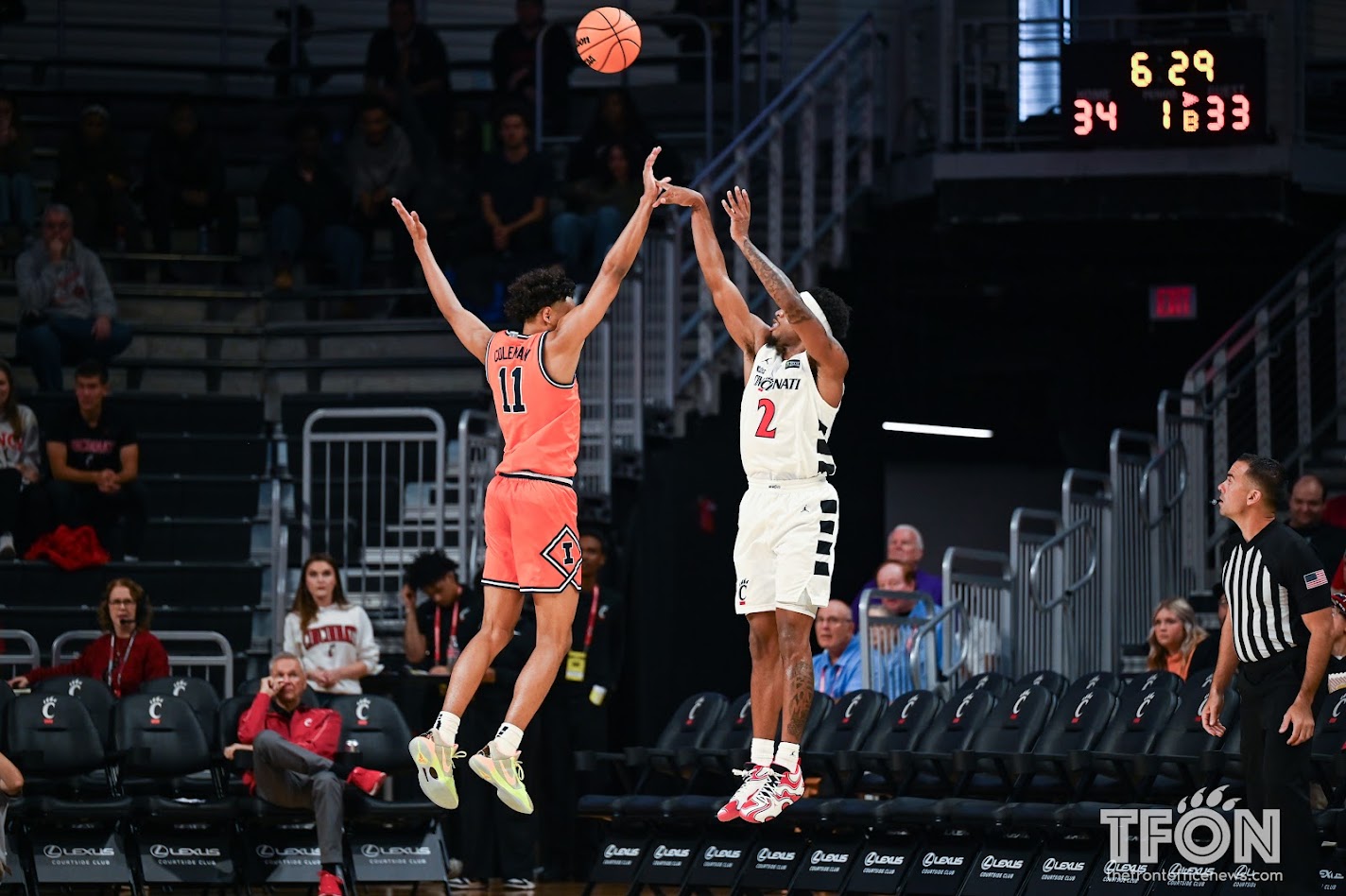
The perimeter difference was especially significant because both teams attempted 33 three-pointers. Illinois did not simply win by taking more shots from beyond the arc. It converted more of the opportunities it created.
Cincinnati’s 12 three-pointers were still a productive offensive contribution. Tejada made three of his six attempts, Elamin finished with three makes on seven attempts, and Riley connected on three of six. Those performances helped the Bearcats produce 96 points and gave them multiple ways to respond when Illinois increased its lead.
The problem was that Illinois had similar perimeter production and greater efficiency overall.
Vaaks was an important contributor to the Illini’s early offensive success. His corner three-pointer at the 16:14 mark helped establish Illinois’ initial 13–6 lead. Later, his three-point play helped Illinois rebuild its advantage at 28–21. He finished the first half with 12 points, giving the Illini an additional scoring threat alongside Stojakovic.
Stojakovic was extremely effective in the opening half, leading Illinois with 16 points at the break. His scoring helped the Illini withstand Cincinnati’s comeback and maintain a 54–49 halftime advantage.
In the second half, Illinois continued to produce timely perimeter baskets. Davis and Vaaks hit consecutive threes after Cincinnati had reduced the deficit to two points. Rather than allowing the Bearcats to take control, the Illini used those shots to rebuild a six-point cushion at 83–77.
That sequence illustrates why shooting percentage matters beyond the final statistical comparison. Cincinnati had spent several minutes narrowing the gap and putting pressure on Illinois. Two consecutive three-pointers immediately changed the situation, forcing the Bearcats to chase the game again.
Cincinnati also had difficulty matching Illinois’ efficiency inside and across the rest of the field. The Illini were converting a greater share of their scoring opportunities, even though the Bearcats were capable of producing their own offensive runs.
llinois’ balanced scoring further complicated Cincinnati’s defensive task. Stojakovic scored 24 points, Coleman added 14, and multiple other Illini reached double figures. That distribution made it difficult for the Bearcats to focus exclusively on one scorer.
The result was an Illinois offense that could punish Cincinnati in different ways. When the Bearcats closed the gap, the Illini could respond with a perimeter basket, a scoring burst from an individual player or another efficient possession.
4. Cincinnati received meaningful contributions beyond Riley, but Illinois’ balanced scoring made the supporting-cast battle more complicated
It would be inaccurate to characterize Cincinnati’s defeat as a game in which Riley received no help. Elamin scored 15 points, Tejada added 13, and several other Bearcats contributed important baskets during the comeback attempts.
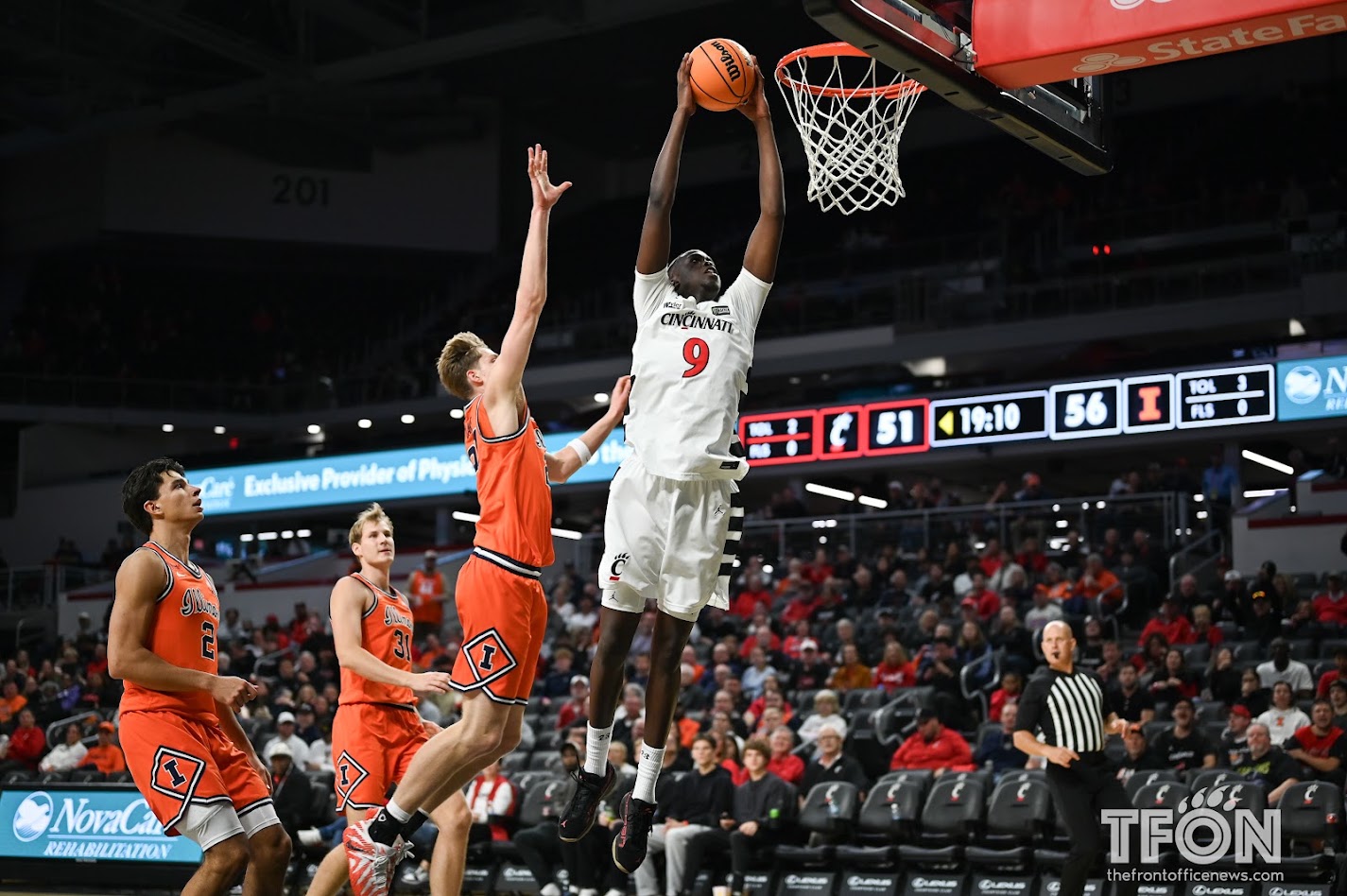
Hastings was especially valuable in the first half. After Cincinnati fell behind early, his scoring helped the Bearcats climb back into the contest. He contributed four points during the eight-point run that gave Cincinnati its first lead at 29–28 and finished the first half with eight points.
Tejada also gave Cincinnati an important scoring option before halftime, entering the break with eight points. His ability to make shots from the perimeter became even more important late in the game, when his three-pointer helped Cincinnati close the gap to 96–89.
Elamin's production was similarly significant. His 15 points gave Cincinnati another reliable scoring option, and he played a central role in the late push. After Illinois had extended the lead to 83–77, Elamin answered with a layup in transition. Later, his three-pointer helped cut the margin to seven with just over two minutes remaining.
Those contributions matter because Cincinnati needs multiple players capable of generating offense when Riley attracts defensive attention or when the opposing team begins to control the pace.
However, the Bearcats were facing a team with comparable depth and more players producing at a high level.
Stojakovic finished with 24 points to lead Illinois, while Coleman delivered 14 points, eight assists and seven rebounds. Coleman’s contribution was particularly influential because he did not simply provide scoring. His playmaking and rebounding helped him affect the game across several categories, and his 10 consecutive points during the decisive second-half stretch helped Illinois establish a 93–79 lead.
Vaaks contributed 19 points, while Illinois also received 15 points from Ethan Brown, who shot 5-of-9 from the field and made three three-pointers. Ivisic scored 13 points and made three of his four attempts from beyond the arc. The balance allowed Illinois to remain dangerous even when one player was not the primary scorer.
Cincinnati scored 30 bench points, compared with Illinois’ 29, and the Bearcats finished with 21 assists, but the Illini won the rebounding battle, 39–32, and also turned 10 Cincinnati turnovers into 20 points.
The Bearcats also failed to capitalize on the 15 Illinois turnovers, scoring just 15 points off the Illini mistakes.
Cincinnati's supporting cast produced enough offense to keep the game competitive, but Illinois combined its balanced scoring with more efficient shooting and converted opportunities when available.
5. The late-game struggles from a two-point deficit to a 14-point hole exposed Cincinnati’s biggest area for improvement
While it is strictly an exhibition and Illinois lived up to most of the preseason hype, the most frustrating aspect of the loss from Cincinnati’s perspective was that the Bearcats had multiple opportunities to put themselves in position to win.
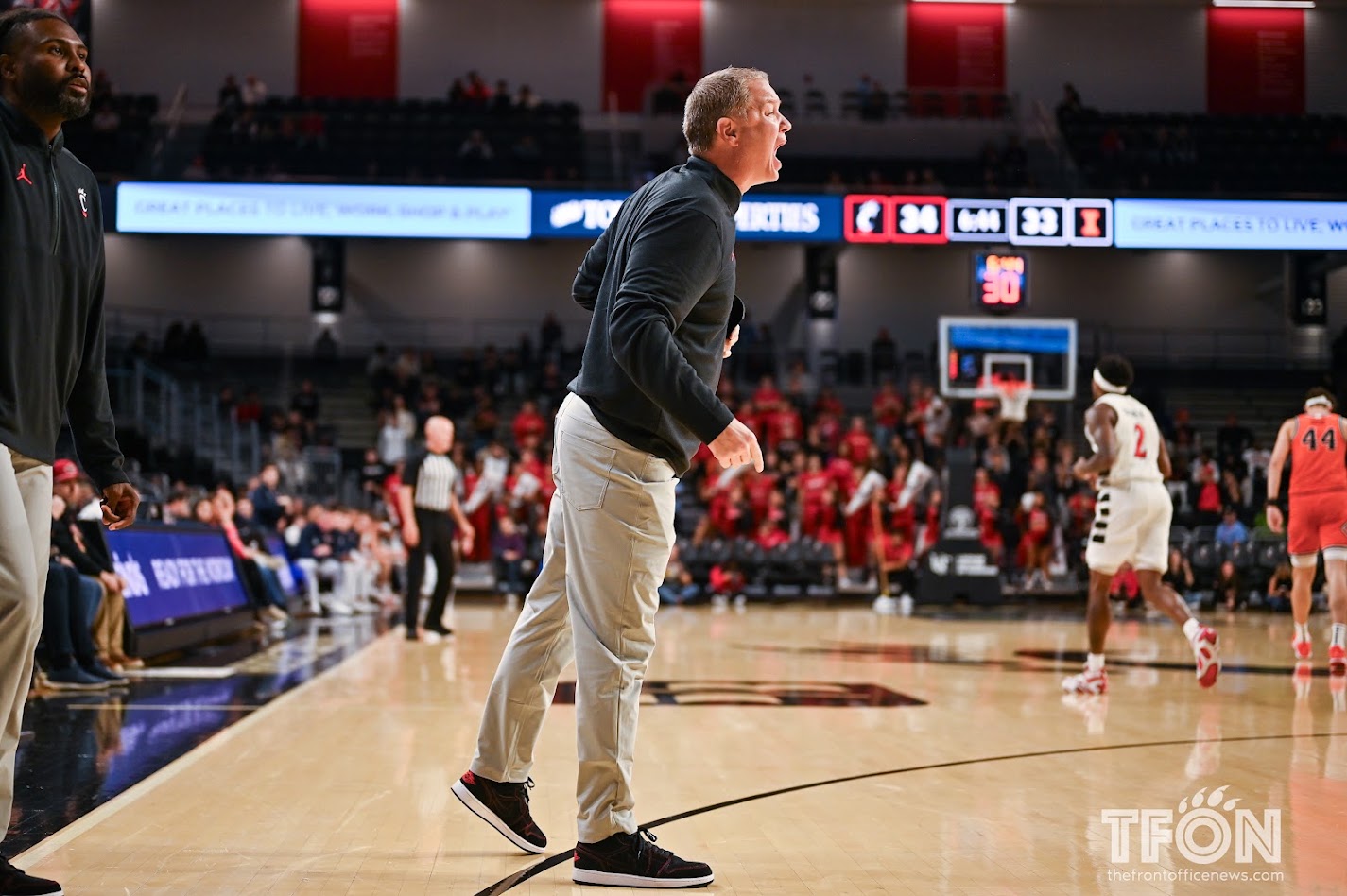
They erased an early deficit, took the lead in the first half, recovered from Illinois’ 12–0 run and entered halftime down only five. In the second half, they again erased a sizable deficit, this time getting within two points with 9:18 remaining.
At that moment, Cincinnati had done much of the work required to make the game competitive. The next task was to keep Illinois from immediately regaining control.
Instead, the final stretch became the clearest example of the difference between staying close and finishing a comeback.
Following Riley’s free throws, the teams traded baskets. Cincinnati had pulled within two, but the Illini remained composed enough to create new scoring opportunities. Davis then made a three-pointer, followed by another from Vaaks, pushing Illinois’ lead to 83–77.
Those consecutive shots were damaging because they forced Cincinnati to abandon the possibility of gradually taking control. The Bearcats now had to respond quickly to avoid allowing the deficit to grow.
Elamin's transition layup provided an answer, but Coleman then took over for Illinois. His 10 straight points pushed the lead to 93–79 with 4:19 remaining, restoring a 14-point advantage and leaving Cincinnati with very little margin for error.
Cincinnati's final rally showed that the game was not entirely out of reach. Elamin and Tejada connected on consecutive three-pointers, cutting the deficit to 96–89 with just over two minutes left. The Bearcats had reduced the margin to seven, and one more productive stretch could have increased the pressure on Illinois.
But Cincinnati could not find the next basket or defensive stop needed to make the comeback realistic. Illinois ultimately closed out the 105–96 victory.
The late sequence raises several questions for Cincinnati.
First, how can the Bearcats prevent an opponent from answering a successful defensive stretch with immediate perimeter baskets? Davis and Vaaks made their threes after Cincinnati had done the hard work of cutting the deficit to two. A single defensive stop could have created an opportunity to tie the game or take the lead.
Second, how can Cincinnati avoid allowing one player to dominate an entire stretch? Coleman’s 10 consecutive points came at a time when Illinois needed to restore its advantage. The Bearcats could not slow him down to prevent the lead from reaching 14.
Third, how can Cincinnati protect possessions when playing from behind? While Cincinnati finished with less turnovers, the timing of each proved critical. Every empty possession became more costly as the clock ran down and the Bearcats needed to score quickly.
These are especially important lessons because Cincinnati's offensive production was strong enough to keep the contest within reach. The Bearcats did not need to find an entirely new scoring identity. They needed more resilience defensivey during the decisive stretches and greater consistency in how they managed possessions.
Final Thoughts
Cincinnati's 105–96 loss to Illinois offered both encouragement and a clear understanding of what the Bearcats need to improve before their next exhibition against Oakland on Oct. 27 at Fifth Third Arena. Although the result was not what Cincinnati wanted, the performance provided a valuable opportunity to measure itself against an opponent with the talent, size and offensive versatility of a Final Four team.
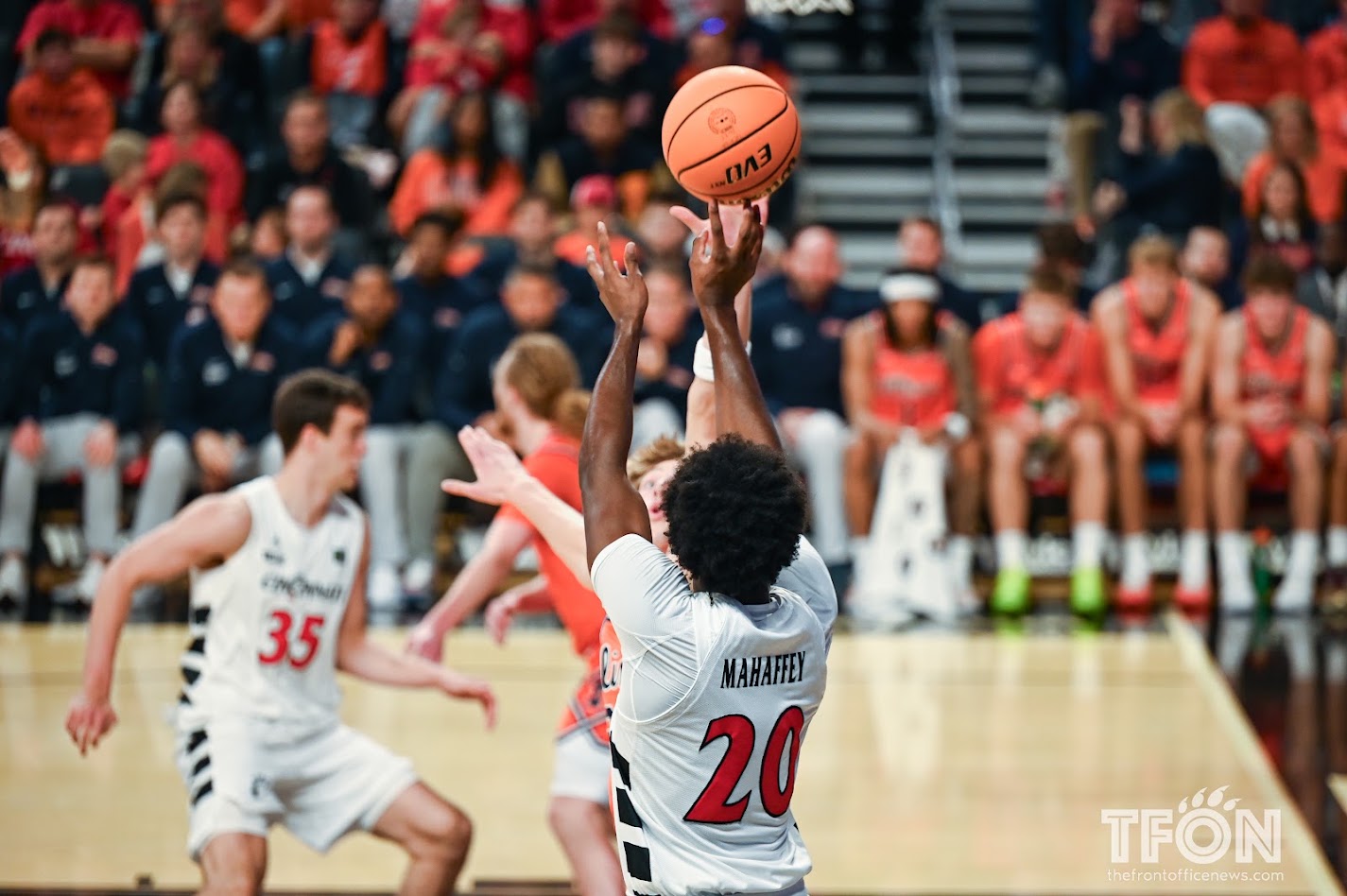
"I’m so impressed with Jerrod. I knew I would be, and their basketball team," Illinois head coach Brad Underwood said following the game. "I knew exactly what we were getting when I scheduled this, and you get a very, very well-coached team. I hope the community of Cincinnati comes out and supports them. This is a really good basketball team. This team is going to be fun to watch. This is an NCAA Tournament team that’s going to continue to get better."
The most encouraging takeaway was Cincinnati's resilience. The Bearcats overcame an early deficit, took their first lead midway through the opening half and repeatedly fought back when Illinois appeared ready to pull away. Even after falling behind by 14 points in the second half, Cincinnati continued competing. That determination demonstrated that the team has the offensive ability and collective spirit to remain competitive against high-level opponents.
Underwood continued with his outlook of why this Cincinnati team could be very good offensively.
"They've got really good players. First of all, they've done an incredible job in the portal. He (Calhoun) knew exactly what he was looking for in the portal," Underwood explained. "I think they can space you with some bigs who can shoot it. The big kid, Hastings, in the middle is a physical specimen and gives you a roll threat, so it makes defensive coverages very hard. Then they do an elite job on the backside of moving and creating different challenges for you in some coverages. MJ's (Collins) a proven 17- or 18-point-a-game scorer. (Myles) Colvin was in the Big Ten. We saw glimpses of him.
I love Tejada. From all the film I've watched on him, I love him. I think he's a matchup nightmare. I think they've put together pieces of a puzzle that fit. Defensively, Jerrod's teams are always really good.”
Tylen Riley's 31-point, 13-assist performance was another significant positive. His ability to score, create opportunities for teammates and control the offensive tempo showed how effective Cincinnati can be when its players take advantage of the space created by one another. Elamin and Tejada also provided meaningful scoring support, while the bench contributed 30 points. Cincinnati's 21 assists further demonstrated the potential of an unselfish offense capable of generating opportunities beyond individual scoring performances.
However, the game also illustrated why offensive production must be matched by consistent defensive execution. The Bearcats struggled to contain Illinois during several decisive scoring runs, particularly when the Illini capitalized on defensive breakdowns and converted perimeter opportunities.
The difference was not simply Illinois' talent. It was the ability to execute when the game reached critical moments. Cincinnati repeatedly worked its way back into contention, including pulling within two points in the second half, but could not consistently secure the defensive stops needed to sustain that momentum. Illinois responded with consecutive three-pointers before another scoring burst pushed the lead back to 14. Those sequences reinforced the importance of winning the smaller battles within a game, including loose balls, contested rebounds, transition defense and individual defensive matchups.
Cincinnati's rebounding performance also deserves attention. The Bearcats finished with a 39–32 deficit on the glass, allowing Illinois to capitalize on key possessions. Securing a rebound at the right moment, preventing second-chance opportunities and keeping opponents away from the rim will need to be a focus as this team continues to develop into Jerrod Calhoun's vision and identity at both ends of the floor. Cincinnati must become more consistent in those situations, particularly when a game is within one or two possessions.
The Bearcats also deserve some consideration for the circumstances surrounding their rotations. Injuries to Akai Fleming and Elijah Perryman limited the team's available options, forcing players into unfamiliar responsibilities. Those challenges provided useful opportunities to evaluate the roster's versatility, but they also underscored the importance of communication, discipline and execution when the rotation changes. As players return and the team gains more game experience, Cincinnati should have additional opportunities to establish greater consistency at both ends of the floor.
Ultimately, the next step is not necessarily to produce more offense. Cincinnati has already shown that it can score against a talented opponent and generate enough momentum to threaten a comeback. The priority is to turn that offensive ability into a more complete team performance by guarding the basketball more effectively, improving transition defense, continuing to limit turnovers and responding with greater composure when an opponent makes a run.
The exhibition against Illinois provided a challenging test at a useful point in Cincinnati's preparation. Facing an opponent with multiple scoring threats exposed areas that may have remained less obvious against a different level of competition. The upcoming matchup with Oakland will provide another opportunity to evaluate the Bearcats' progress against a different style of play, particularly as they continue refining their offensive and defensive identities.