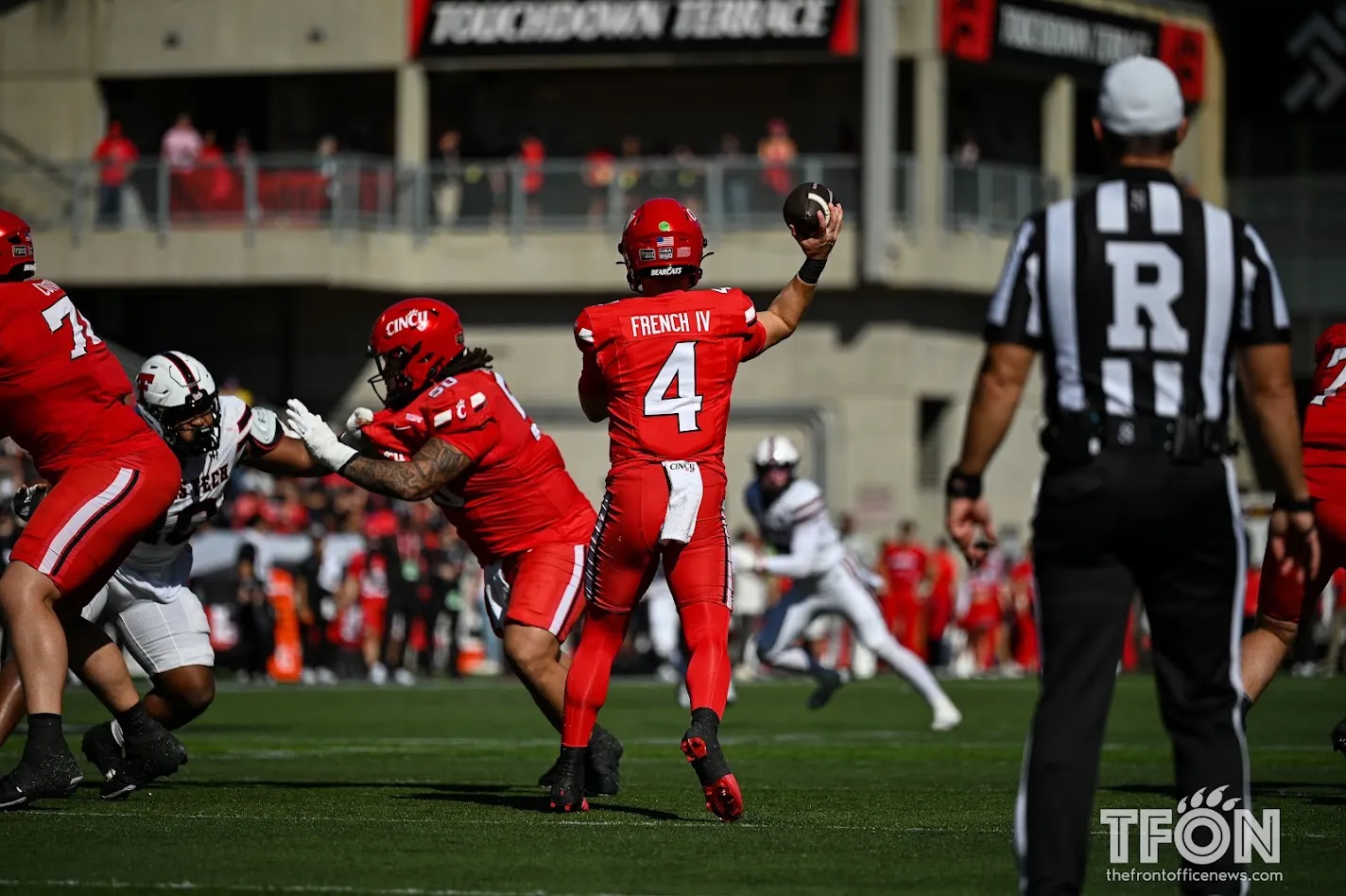
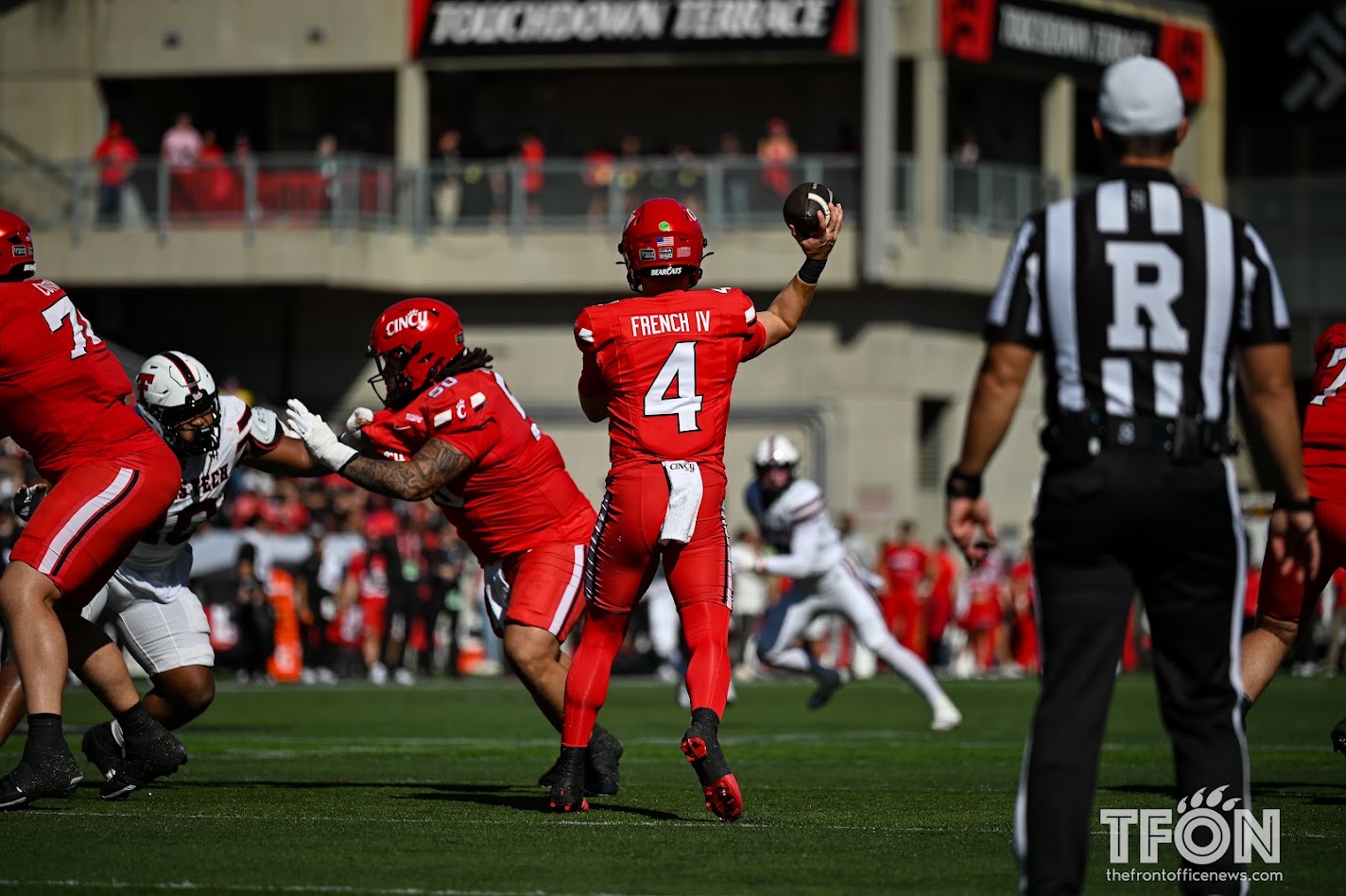
Cincinnati did more than knock off a top-10 opponent Saturday. The Bearcats answered a painful fourth-quarter collapse from the previous week, controlled the line of scrimmage against one of the nation's most respected defenses, forced three turnovers, and turned Homecoming at Nippert Stadium into the kind of afternoon that can define a season.
The 37-24 victory over No. 8 Texas Tech was a complete-team performance, one in which quarterback JC French IV threw four touchdown passes, running back Cole Tabb rushed for 173 yards, and a Cincinnati defense that had plenty to prove delivered when the stakes were highest.
The final numbers tell the story of a team that found its footing, imposed its will and refused to let a marquee opportunity slip away. The Bearcats were more efficient on the ground, more opportunistic defensively and considerably better at turning scoring opportunities into touchdowns.
Cincinnati finished with 424 yards of total offense to Texas Tech's 400, but the Bearcats made their biggest impact through efficiency, defensive takeaways and timely scoring. Texas Tech accumulated 173 rushing yards and 227 passing yards, yet Cincinnati consistently forced the Red Raiders to work for their points. The Bearcats led 24-6 at halftime, weathered a third-quarter push and entered the fourth quarter with a 31-15 advantage before putting the game away late. As head coach Scott Satterfield put it afterward, this was a win that reflected the work of an entire program.
"To come out there and really dominate the game as we did in all three phases, and to beat a number eight ranked Texas Tech team with a ton of resources, and for us to be able to go do that, this is probably one of the greatest wins I've been a part of."
Here are five key takeaways from Cincinnati's defining Homecoming performance.
1: Cincinnati's defense delivered when it mattered most
The most important storyline of this game might not be the 37 points Cincinnati scored. It might be what the Bearcats prevented Texas Tech from doing.
One week after a heartbreaking 45-42 loss at West Virginia, Cincinnati's defense faced an enormous test against a Red Raiders team that entered the afternoon 6-0 and ranked No. 8 nationally. Texas Tech had legitimate College Football Playoff aspirations, and the Bearcats needed to demonstrate that last week's fourth-quarter disappointment would not define their season.
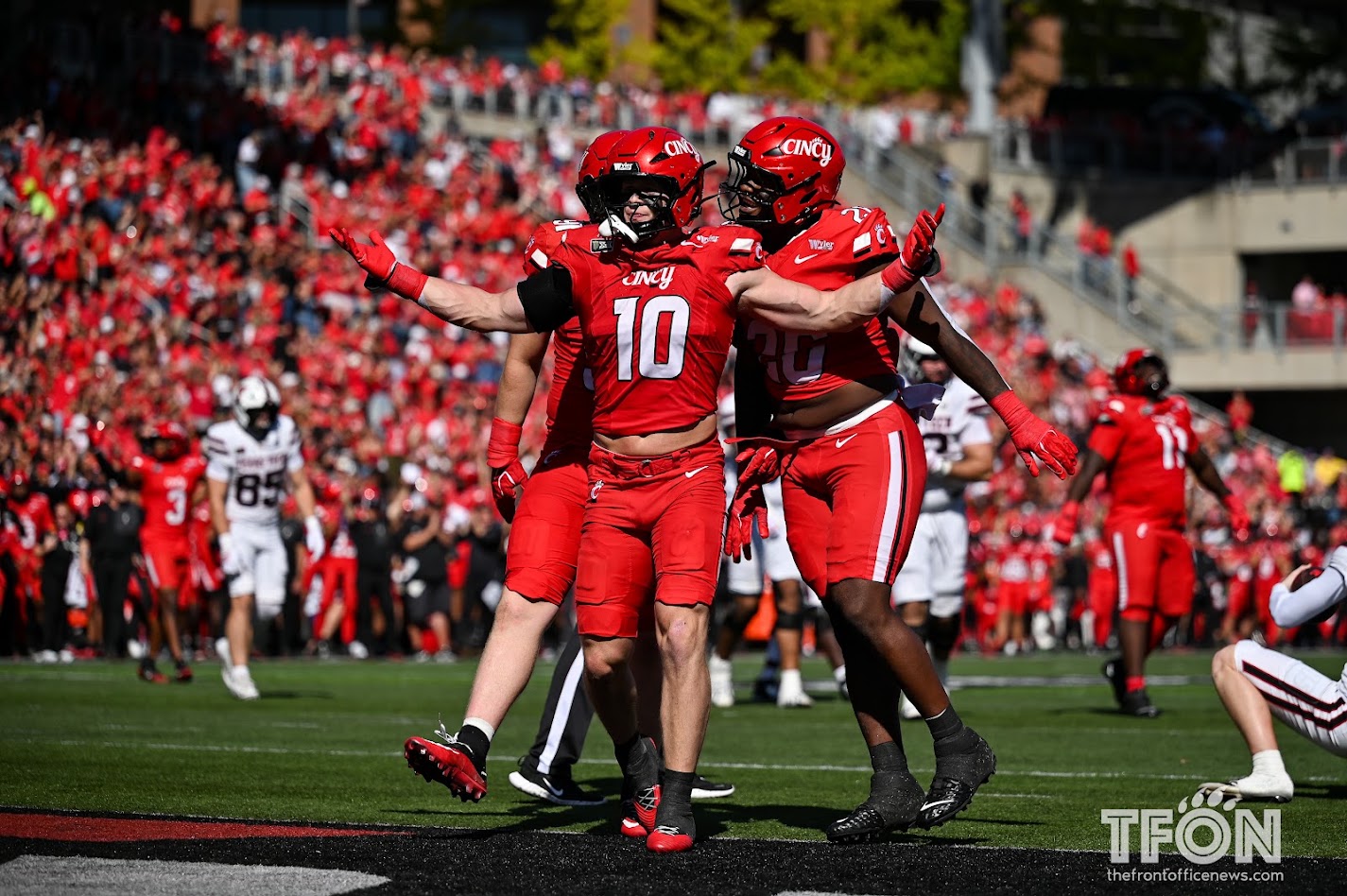
They responded with one of their most complete defensive performances under Satterfield.
Texas Tech finished with 400 yards of total offense, including 173 rushing yards and 227 passing yard. Those numbers might appear respectable, but the context matters: the Red Raiders repeatedly had to settle for field goals instead of touchdowns, and Cincinnati made critical plays whenever the game threatened to swing.
Texas Tech scored just six points in the first half. Cincinnati's defense forced a turnover on the Red Raiders' opening possession when MJ Cannon knocked the ball loose on a fourth-and-1 quarterback keeper, with Antwan Peek Jr. recovering. That takeaway immediately gave the Bearcats an opportunity to establish control.
Later, Patrick Bauer's sack pushed Texas Tech back to its own 6-yard line and helped force a punt. The Bearcats also kept Texas Tech's dangerous playmaker J'Koby Williams from consistently taking over the game.
Cincinnati forced three turnovers, including a critical fumble forced by Jasper Beeler in the fourth quarter. With Cincinnati leading 31-18, Beeler's forced fumble gave the Bearcats possession and another opportunity to put the game beyond reach. Cincinnati capitalized, with Cole Tabb breaking free for a 58-yard touchdown run with 6:06 remaining to establish the final 37-18 advantage before Texas Tech added a late touchdown.
Satterfield specifically praised the defensive staff and players for recovering emotionally from the West Virginia loss.
"I just give credit particularly to our defensive coaches and our players on defense, to be able to come back from that, particularly that fourth quarter, and to put together a game plan today to go execute and play their butts off."
That response became even more important in the second half. Cincinnati surrendered a pick-six after a controversial targeting call against Texas Tech was overturned, and French threw another interception on the following possession. Suddenly, the Red Raiders had an opportunity to make the game uncomfortable.
The defense answered by forcing a missed field goal and giving the offense a chance to rebuild its lead.
That sequence was a fitting conclusion to a defensive performance built around creating opportunities. Cincinnati's defense did not need to shut down every drive. It needed to make the decisive play at the decisive moment "We live for the big moments, we live for the big games, and we never stray away from it," MJ Cannon explained following the game.
That is the most encouraging development for Cincinnati moving forward. The Bearcats did not need a perfect offensive performance to win a major game. They needed their defense to remain composed, create opportunities and make the opposition work for everything.
On Saturday, it did exactly that.
2. Cole Tabb delivered a signature performance against a defense built to stop the run
If there was one offensive player who embodied Cincinnati's physicality, it was Tabb.
The running back finished with a career-best 173 rushing yards on 16 carries, averaging 10.8 yards per attempt and adding a rushing touchdown. He also caught a four-yard touchdown pass from French in the second quarter.
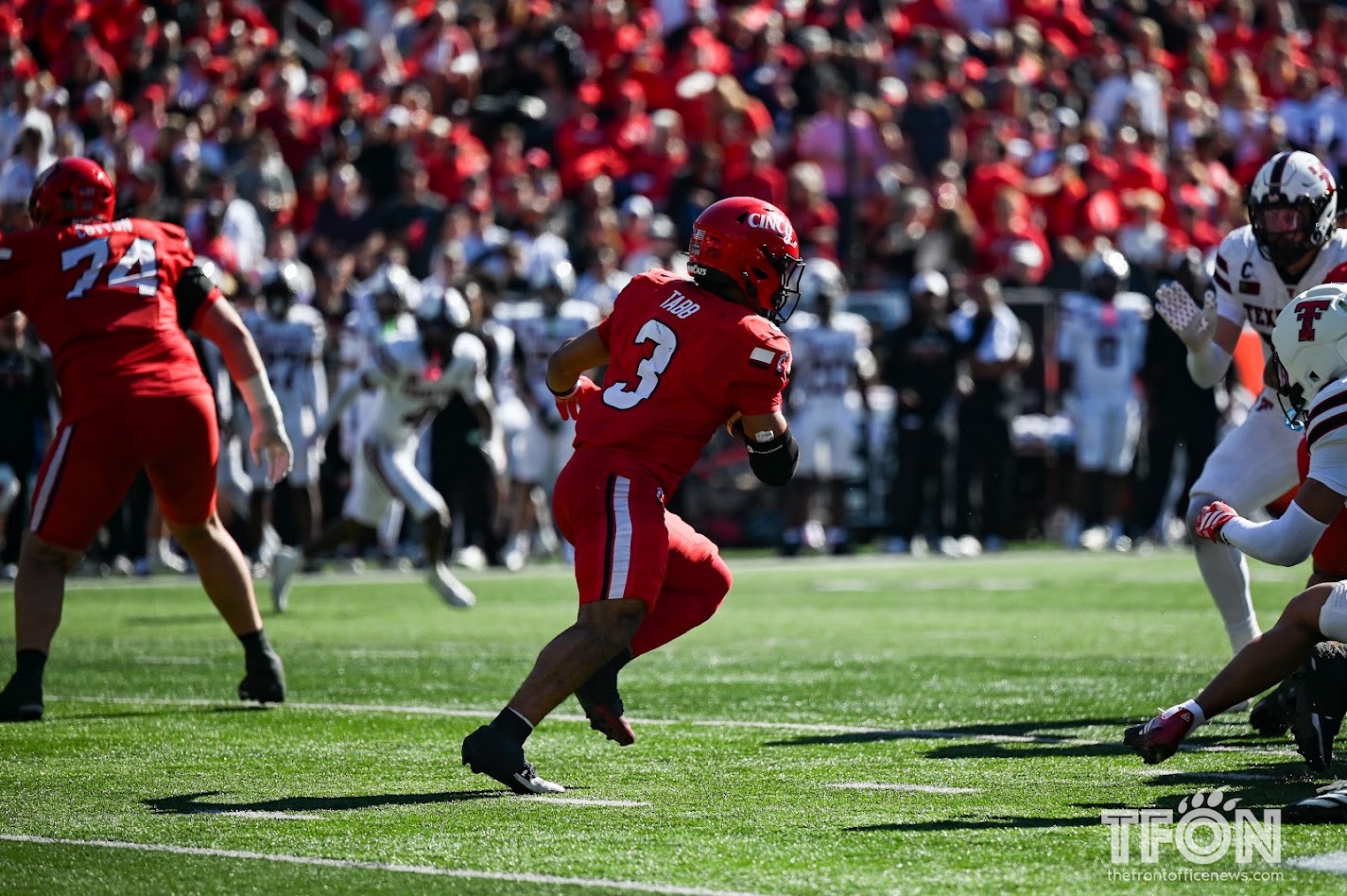
Those numbers become more impressive when considering the opponent.
Texas Tech arrived with one of the country's most formidable rushing defenses. The Red Raiders ranked among the nation's top five teams in that category and had not allowed a rushing touchdown.
Cincinnati finished the afternoon with 252 rushing yards, repeatedly moving Texas Tech off the ball as the game progressed.
The transformation was not immediate. Cincinnati struggled to establish its running game during the opening quarter, and the offense initially found itself behind the chains. But the offensive line gradually began creating the space Tabb needed.
Offensive lineman Evan Tengesdahl emphasized the importance of the defense's stops in helping the offense find its confidence.
"I really feel like it was when the defense would get stops and put motivation our way. We felt like we were dominating the line of scrimmage pretty well."
Tabb described the adjustment as a collective offensive effort rather than an individual achievement.
"Our whole offense just settling in," he explained. He credited the offensive line for becoming "people-movers," creating cutback lanes, getting to the second level and allowing the running game to operate with confidence.
The payoff came in the fourth quarter.
With 6:06 remaining, Cincinnati faced a critical possession after Texas Tech had trimmed the lead to 31-18. The Bearcats needed a response that would put the game beyond reach. Tabb supplied it with a spectacular 58-yard touchdown run, breaking through the defense and sprinting into the end zone.
The play pushed Cincinnati's advantage to 37-18 and effectively ended Texas Tech's comeback hopes.
Tabb's contribution went beyond the final numbers. He helped Cincinnati control the tempo, gave French a reliable option when the passing game encountered difficulties and forced Texas Tech to respect the run throughout the afternoon.
His approach afterward was characteristically understated.
"I am just worried about coming in every day and working," Tabb said. "We always say one play at a time, and we truly mean that."
That mindset appears to be serving him well. He has now produced back-to-back 100-yard rushing performances, and Saturday's outing was a career-best effort against an opponent that had made stopping the run a central part of its defensive identity.
For Cincinnati, Tabb is becoming more than a productive running back. He is becoming the engine of an offense capable of competing with the Big 12's best teams.
3. JC French IV answered the challenge and composure when it mattered French's performance was not flawless, and that is part of what made it noteworthy.
The quarterback completed 19 of 30 passes for 172 yards and a career-best four touchdown passes. He also threw two interceptions in the third quarter, including a pick-six that briefly gave Texas Tech momentum.
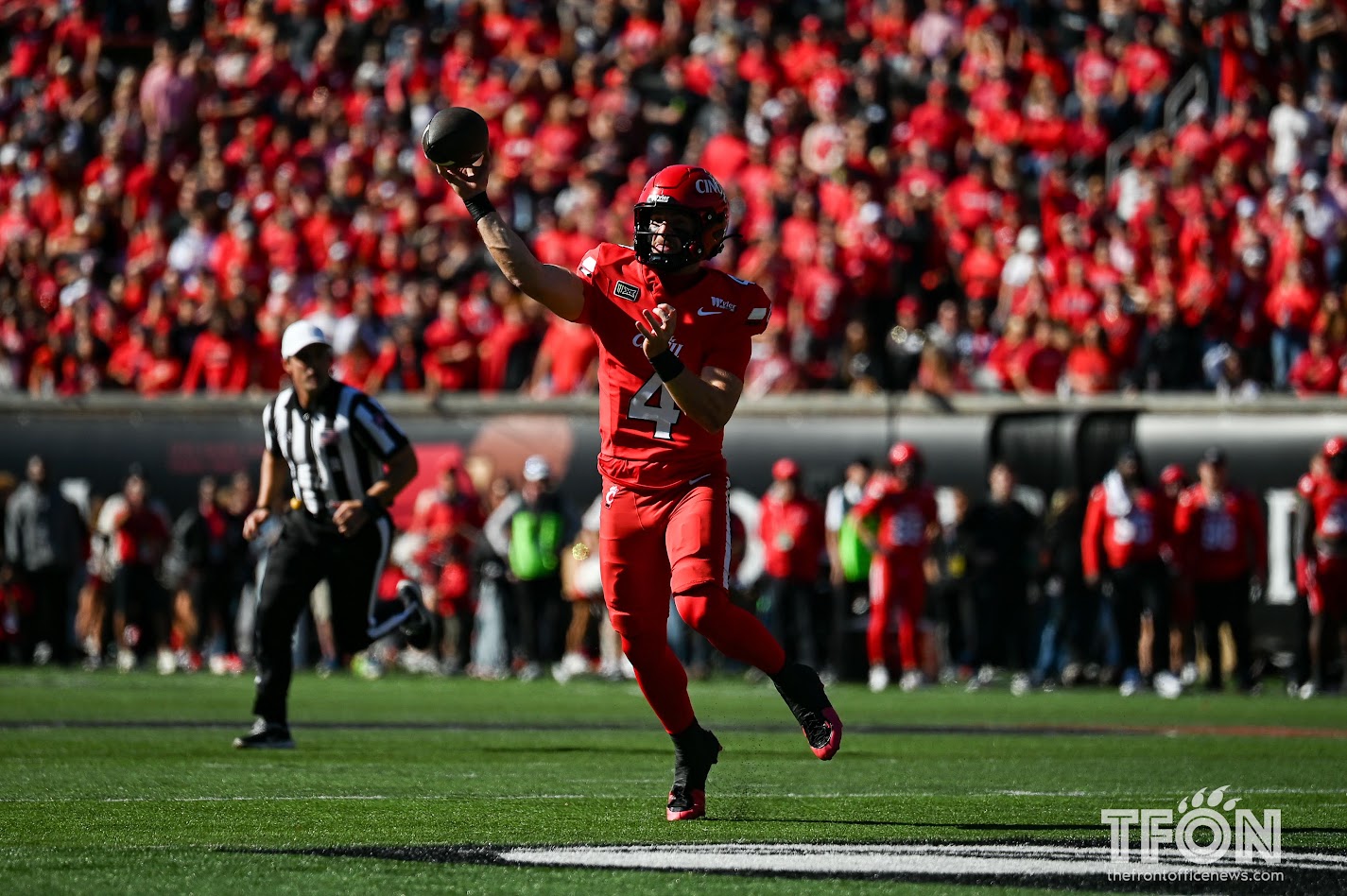
A lesser performance might have unraveled at that point. Cincinnati instead watched its quarterback reset, return to the huddle and deliver the throw that helped put the game away.
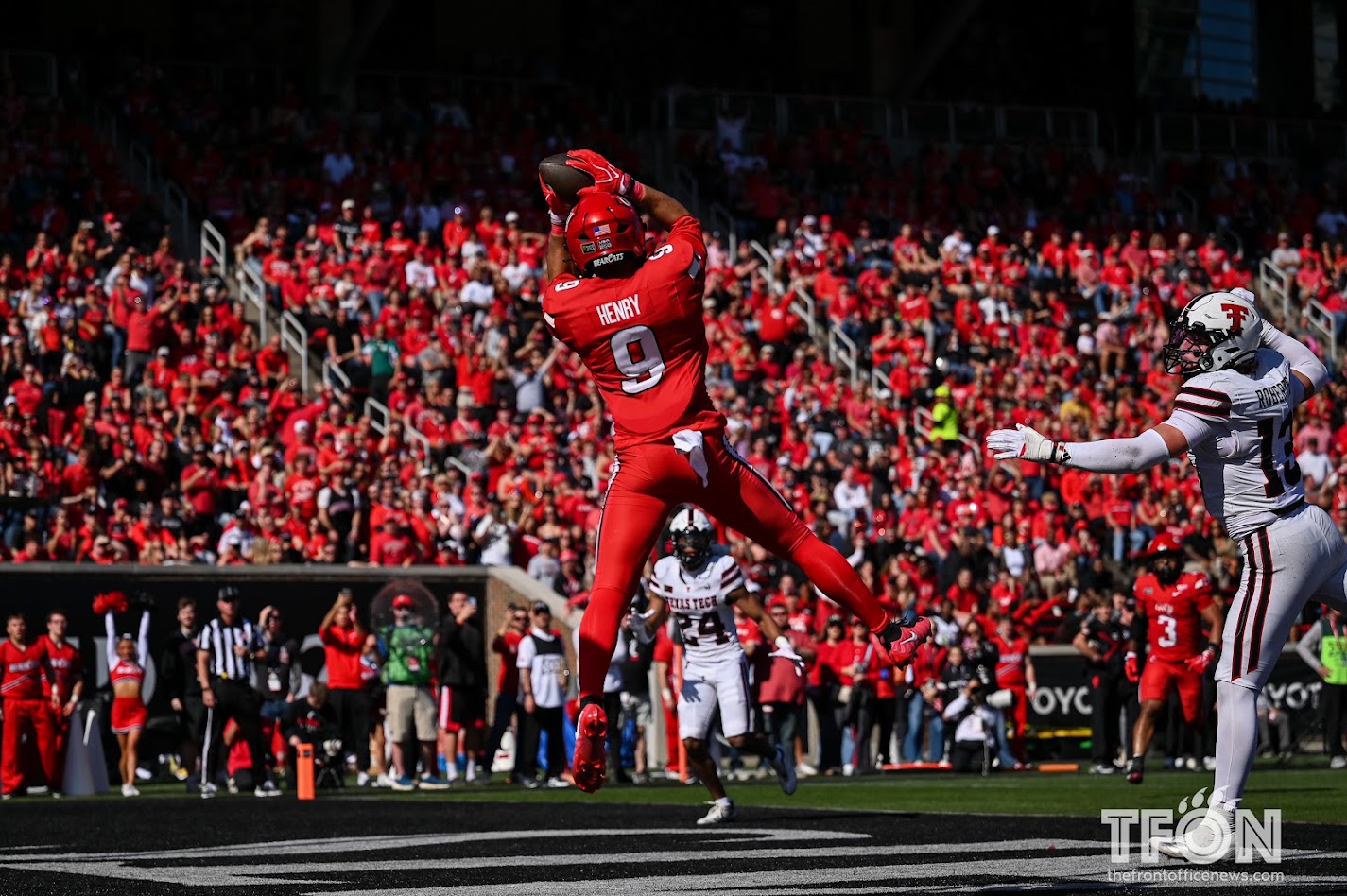
French's four touchdown passes went to four different receivers with Tabb, Malchi Henry, Lyviel Waters, and Larenzo Fenner all being on the receiving end those touchdown passes.
The distribution was important. Cincinnati was not dependent on one receiver winning every matchup. French spread the ball around, while Tabb's rushing production forced Texas Tech to account for the ground game.
The three first-half touchdown passes were particularly decisive. Cincinnati went into halftime leading 24-6 after scoring 21 points in the second quarter, turning a competitive opening period into a commanding advantage.
The third quarter then tested French's ability to handle adversity.
After the controversial reversal of a targeting call turned an interception into a Texas Tech touchdown, French threw another interception. The Bearcats could have allowed the game to spiral, especially given the emotional baggage of the previous week's collapse.
Instead, Cincinnati's defense held Texas Tech to a missed field goal, and French responded with a touchdown drive capped by the pass to Fenner.
Satterfield defended French's overall performance while acknowledging the interceptions and explaining why he remained confident in his quarterback.
"I thought JC played awesome," the coach said. "He ran the ball well when we needed to get us in position to make plays, you know. But then, the four touchdown passes was huge."
French, meanwhile, credited the offensive line and Tabb for creating the conditions in which the passing game could succeed.
"They continue to move people and make big, huge gaps for Cole [Tabb]," French said. "Cole is unbelievable. So glad he is on our side."
That mutual dependence is a promising sign for the offense. French does not need to throw for 300 yards if Tabb is averaging nearly 11 yards per carry. And Tabb does not need to carry the entire offense if French can punish defenses for overcommitting to the run.
The quarterback's response to adversity may ultimately prove more valuable than the four touchdowns themselves. Cincinnati will need French to continue making good decisions, particularly against opponents capable of exploiting turnovers. But Saturday demonstrated that he can recover from mistakes without losing the ability to deliver decisive plays.
4. Second quarter dominance and situational awareness
Cincinnati's 37-24 victory was built on a remarkable second-quarter surge and reinforced by the Bearcats' ability to respond when Texas Tech threatened to come back.
The first quarter was a different story. Texas Tech controlled the ball for long stretches, and both teams settled for field goals. Cincinnati led just 3-0 before the Red Raiders answered with two field goals to take a 6-3 advantage.
Then the game changed.
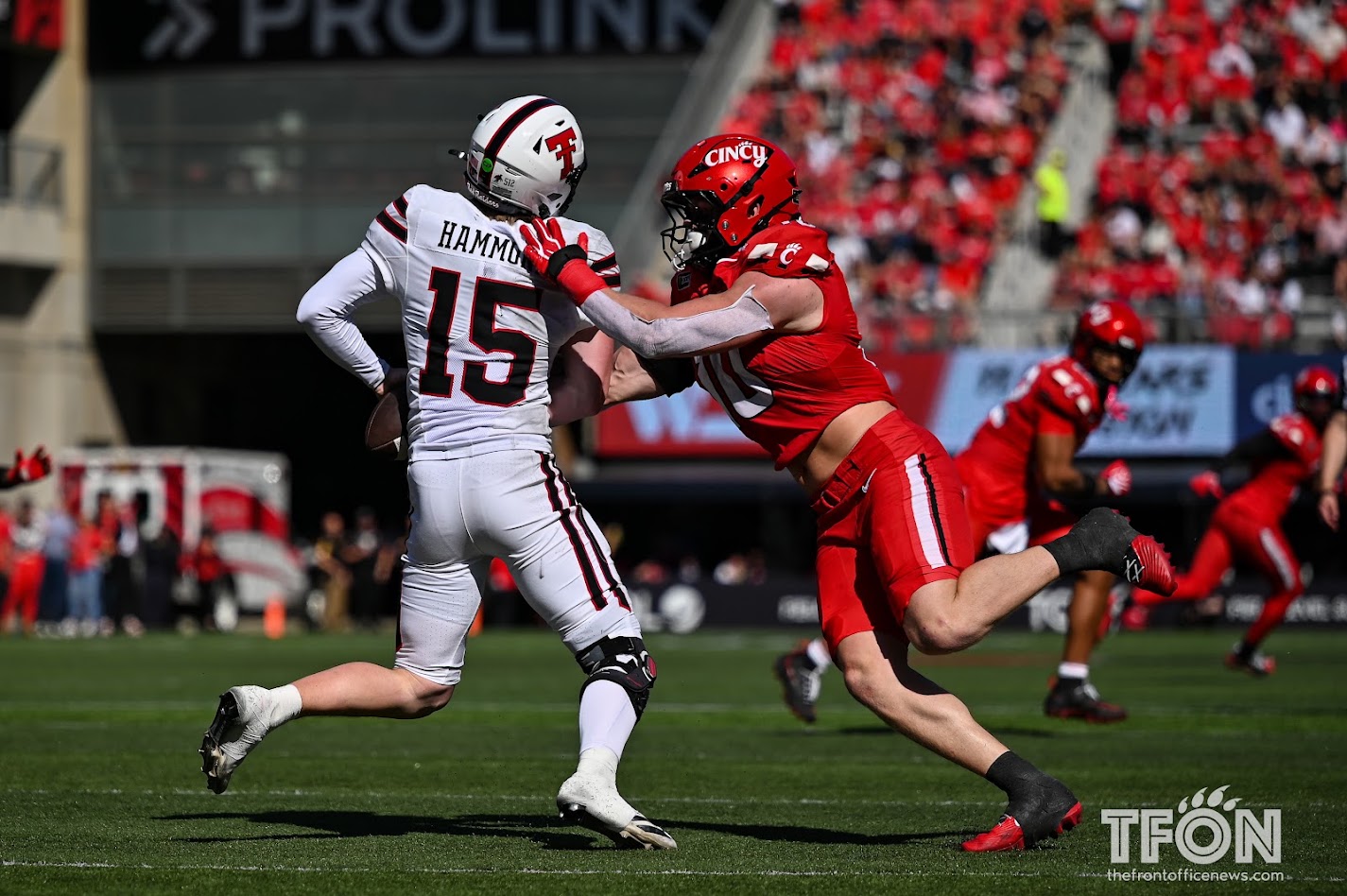
With 7:48 remaining in the second quarter, JC French found Tabb for a four-yard touchdown to cap an 85-yard drive.
With 1:37 remaining in the second quarter, an 11-pay, 55 yard drive ended with French finding Henry for a five-yard touchdown pass on a ball that beautifully threaded over a linebacker in the back of the end zone.
After getting the ball back on an MJ Cannon interception at the Bearcats' 25 -yard line, Cincinnati drove 75 yards in five plays, ending with a French pass to Waters for a touchdown to extend the UC lead to 24-6 with :05 seconds remaining in the half.
The final sequence was particularly damaging to Texas Tech. Cannon's interception gave Cincinnati a short window to score before halftime, and the Bearcats took full advantage.
Tabb ripped off a 51-yard run during the drive, French added a 22-yard scramble, and Waters finished the possession with five seconds left. Cincinnati had scored 21 unanswered points in the quarter and seized control of a game that had begun with Texas Tech dictating the pace.
The lead was not completely safe. Texas Tech opened the second half with a field goal, then returned an interception for a touchdown to make it 24-15. After French threw a second interception, Cincinnati's defense held the Red Raiders to a missed field goal.
That stop was a turning point in its own right. Rather than surrendering the lead, Cincinnati answered with the touchdown pass to Fenner to restore a 16-point advantage.
The Bearcats' special teams also deserve credit. Stephen Rusnak converted his 47-yard field goal, and Satterfield singled out the kickoff coverage unit for containing Texas Tech's dangerous return threat.
The penalty differential was especially significant. Texas Tech committed 12 penalties for 85 yards, compared with Cincinnati's five penalties for 55 yards. The Red Raiders repeatedly put themselves in difficult situations, while Cincinnati took advantage of its most important opportunities.
There were still mistakes to clean up. French's interceptions and Cincinnati's struggles on third down are areas the coaching staff will need to address. But the Bearcats demonstrated something important: they can withstand a momentum swing, regain their composure and execute when the next opportunity arrives.
That is the difference between simply having enough talent to compete and playing with the discipline required to defeat a top-10 opponent.
5. This victory validated Cincinnati's belief that it can compete with the nation's elite
There was plenty of outside attention surrounding this matchup, and for good reason. Texas Tech entered the game ranked No. 8, undefeated and coming off a season in which the Red Raiders reached the College Football Playoff. Cincinnati, meanwhile, entered following a painful loss at West Virginia.
The stakes extended beyond a single Saturday.
Cincinnati had an opportunity to demonstrate that it could defeat a program with significant resources and national ambitions. It also had a chance to show that the Bearcats' own program was capable of taking another meaningful step forward in the Big 12.
Satterfield made the significance clear after the game.
"Because of college football and the way it is over the last three years, and what they've been able to do in their program the last two to three years, and that team played in the playoffs last year," he said. "That team is projected to go again this year in the playoffs."
He then turned his attention to Cincinnati's own players and staff, emphasizing how much work had gone into the performance.
"I'm really, really proud of our program and our players, our coaches, our staff. Our guys work their butts off, and nobody gives them a chance."
That last point is central to the story. Cincinnati did not merely survive a close game against a ranked team. The Bearcats led 24-6 at halftime, absorbed a difficult third-quarter stretch and ultimately won by 13 points.
The result also carried historical significance. The victory was the program's first home win over a top-10 opponent since defeating No. 7 Rutgers in 2006.
French was quick to redirect the attention from the noise surrounding the matchup to the team itself.
"I think all that stuff is just a lot of media types. So I do not focus on all that. I just like playing with my guys."
He also credited Satterfield and the coaching staff for helping the team respond to the previous week's loss.
"Just the way our team bounced back and responded from last week should tell you everything. It starts with Coach Satterfield and goes down."
That response could have lasting implications for the season. Cincinnati improved to 5-2 overall and 2-2 in Big 12 play, while Texas Tech fell to 6-1 and 3-1. The Bearcats now have a performance they can point to when discussing their ceiling against high-level competition.
Still, one victory does not solve every problem. Cincinnati must improve its third-down efficiency, protect the football and prove it can sustain this level of execution against another strong opponent.
Fortunately for the Bearcats, the schedule provides an immediate opportunity with No. 10 Utah visiting Nippert Stadium next Saturday.
The Texas Tech victory will mean more if Cincinnati can build on it. For now, though, it is a substantial step forward for a team that responded to adversity and delivered when its season needed a defining moment Final thoughts: Nippert Stadium was electric and Homecoming felt bigger than football
Some games are remembered for the final score. Others are remembered for the feeling of being there.
Saturday at Nippert Stadium was both.
Cincinnati's 100th Homecoming brought together the university's past and present for an afternoon that felt like a celebration of everything college football can mean to a community, beginning with the Hall of Fame Induction ceremony Friday night that included Bob Huggins, Jason Kelce, and Conner Barwin. Alumni returned to campus, students packed the stands, and a sold-out crowd of 38,088 filled the historic stadium for a matchup that carried far more significance than an ordinary October game.
The atmosphere was not simply a backdrop to Cincinnati's victory. It was part of the story.
Satterfield said the crowd created a tangible competitive advantage, particularly when Texas Tech had the ball. The Bearcats' coach explained that the Red Raiders were forced to use silent cadence on offense, which limited their communication and gave Cincinnati's defense opportunities to attack.
"Every time they're on offense, they're having to use silent cadence, and that's an advantage for us," Satterfield said.
That is what makes a packed Nippert so special. The stadium's intimate setting brings the crowd close to the field, and when the noise rises, the impact is felt directly by the players. The home crowd was not merely celebrating good plays; it was helping create the conditions for them.
Nippert Stadium is a special setting and the atmosphere can not accurately be described to outsiders. It is a one-of-a-kind atmosphere that has to be experienced to truly understand it.
The players felt it, too.
French was visibly appreciative of the fans' role in the win.
"Pretty crazy, honestly," he said when asked about the fans rushing the field. "It is everything you dream of as a kid, which is super cool."
He added, "That student section was unbelievable. I really think they helped us get this huge win today. All love to the fans."
Tabb echoed that sentiment, describing the experience as something he would remember for the rest of his life.
"It was super special, especially knowing how much this homecoming and everything means to the community," Tabb said. "Being able to go out there and perform and play like that in front of that crowd, it was a once in a lifetime experience. It was awesome."
Tengesdahl, who has experienced other major college football environments, placed Saturday among the best he has seen at Cincinnati. He compared the atmosphere to the Bearcats' memorable home game against Oklahoma and said the crowd's energy made the difference.
"This is definitely top three," he said.
That assessment carries weight coming from an offensive lineman who has experienced big-game environments elsewhere. It also speaks to the potential of Nippert when the matchup, the stakes and the community all align.
And on Saturday, they did.
The 100th Homecoming was already a milestone. A sold-out stadium was already a reason to celebrate. But defeating an undefeated, eighth-ranked Texas Tech team transformed the occasion into something far more memorable.
When the final whistle sounded, fans poured onto the field to celebrate with the Bearcats. It was the culmination of an afternoon in which the crowd helped energize the defense, the offense found its rhythm, and a team coming off a painful defeat delivered one of its biggest wins in years.
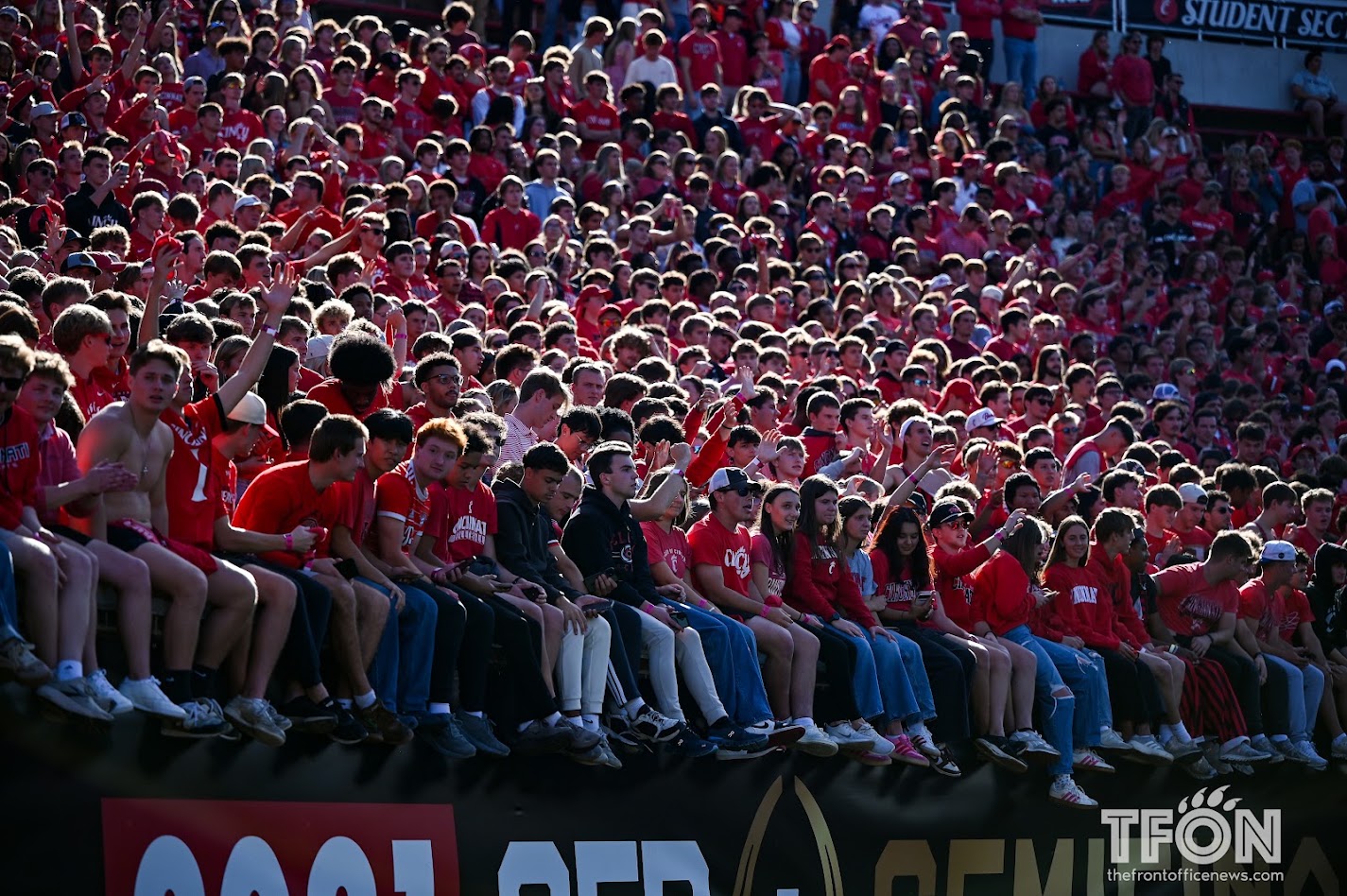
The moment also felt like a reminder of what Cincinnati football can be when the university, the players, the alumni and the city rally around the same cause.
Satterfield said he had asked his team to visualize the outcome before the game. He told the players that they would play aggressively, that the pressure would mount on Texas Tech and that the fans would eventually come onto the field to celebrate.
"You have to see it. You have to visualize it, and it all happened today."
That is a fitting way to close this one.
Cincinnati did not simply imagine a statement victory. It earned one. And the crowd that filled Nippert for Homecoming made sure the players knew exactly what it meant.
The lasting memory may be the sound of Nippert Stadium when Cincinnati realized the upset was real — a packed, roaring stadium celebrating a team that had answered adversity with its best performance of the season.
For one afternoon, Nippert was everything a college football home should be: loud, emotional, connected to its community and absolutely electric.
And with Utah coming to town next weekend, Cincinnati has an opportunity to make this unforgettable Homecoming the beginning of something even bigger.