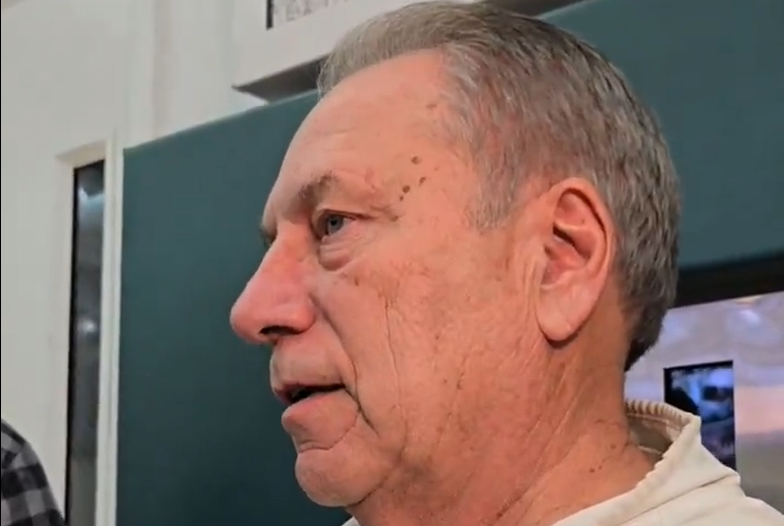
Tom Izzo’s line in the sand isn’t about winning
Responding to Baylor enrolling a drafted player, Izzo framed the moment as a test of fairness, education, and whether anyone in college basketball is still willing to say no.
Tom Izzo did not plan to make news when the question came. He didn’t even plan to linger on it.
But once the subject turned to Baylor enrolling a player who had been drafted into the NBA, Izzo’s response spilled beyond policy and into something far more personal: what college basketball is becoming — and what he refuses to let it take from him.
“I don’t know the whole situation,” Izzo said first, measured, careful. He acknowledged friendship with Baylor head coach Scott Drew. He acknowledged that Drew had served on NCAA committees. And then the tone shifted. “I’m a little surprised.”
That surprise wasn’t about Baylor alone. It was about the direction of the sport, the decisions being allowed, and the consequences he believes no one is fully reckoning with yet. Izzo made clear he wasn’t speaking for Michigan State as a program. He wasn’t lobbying competitively. He was talking, he said repeatedly, about the kid.
And about fairness.
Izzo framed the situation not as a loophole but as a collision — between college athletics and professional logic. “If we’re dipping into that one,” he said, referencing drafted players returning to college, “come on — Magic and Gary, let’s go, baby.”
The sarcasm landed hard. The point was sharper: if there are no real limits anymore, if precedent no longer matters, then what exactly separates college basketball from the pros?
He rejected the idea that this is simply how professional sports operate. “No, no, no,” he said firmly. “They’ve got rules too.” Trade deadlines. Roster constraints. Salary structures. Systems that prevent exactly the kind of chaos now creeping into the college game.
What bothered Izzo most wasn’t competition. It was displacement.
He told a hypothetical that was anything but abstract. He asked one of his own players — Coen Carr — whether it would be fair if Izzo went out and brought back a former player, effectively bumping someone else out of a role they’d earned. He laughed while telling it, but the implication was serious. “Somebody’s sitting. Somebody’s not playing.”
“That’s not fair to the players,” Izzo said.
In his view, college basketball still carries an obligation — one the NCAA has abandoned. “There needs to be an educational component,” he said. “The NCAA ruined that.”
He spoke about age limits disappearing. About players in their mid-to-late 20s. About decisions being made without guardrails or long-term thinking.
Izzo bristled at the idea that he resists change out of stubbornness. He pointed out that he has adapted — again and again. But there is a line. “I’m not going to recruit the Miles (Bridges),” he said, invoking the idea of replacing players midstream simply because the market allows it.
He didn’t call other coaches immoral. He didn’t claim moral superiority. In fact, he acknowledged the pressure coaches face.
“Coaches are going to do what they’ve got to do,” he said. His frustration was directed upward — at the NCAA, at committees, at leaders who he believes are running from responsibility.
“I think leadership means you fight,” Izzo said. “You make decisions that are sometimes unpopular.”
Instead, he sees popularity winning out. Decisions that satisfy a narrow segment while eroding the foundation beneath everyone else. He estimated that fewer than 10 percent of coaches support what’s happening now. “Five percent,” he said.
Izzo spoke about fans, too — the often-forgotten third party in all of this. He talked about generations of kids who followed players, who felt connected to programs, who built identities around continuity. “Now you’re going to follow them to four different schools?” he asked.
That loss of connection worries him more than losses on the court.
“That's the danger, if you lose fan bases,” a reporter said to him. “A generation from now, none of this exists the way it does now.”
Izzo agreed.
He offered a stark choice: either admit college sports are professional and structure them that way — or stop pretending. “Let’s not be half,” he said. “There’s no such thing as being half.”
Izzo acknowledged the irony. He knows speaking this way will bring criticism. He knows it will “get him.” But he also made clear he isn’t going to let it dominate his season or his mindset. A fellow coach texted him, he said, urging him not to let the issue ruin his year.
He won’t fight city hall. But he won’t bless it either.
“I would question anybody who questions whether I want what’s best for the kid,” Izzo said. He admitted freely that 18-year-olds aren’t equipped to make life-altering decisions alone. He wasn’t either, he said. That’s why parents, coaches, and teachers exist — to help guide decisions when experience is thin and consequences are long.
Izzo closed the subject knowing full well he had said enough to spark backlash. But he didn’t back off the core belief. College basketball, in his mind, is losing something essential. And once it’s gone, no amount of talent, money, or freedom will bring it back.
Here is Izzo's answer in full: