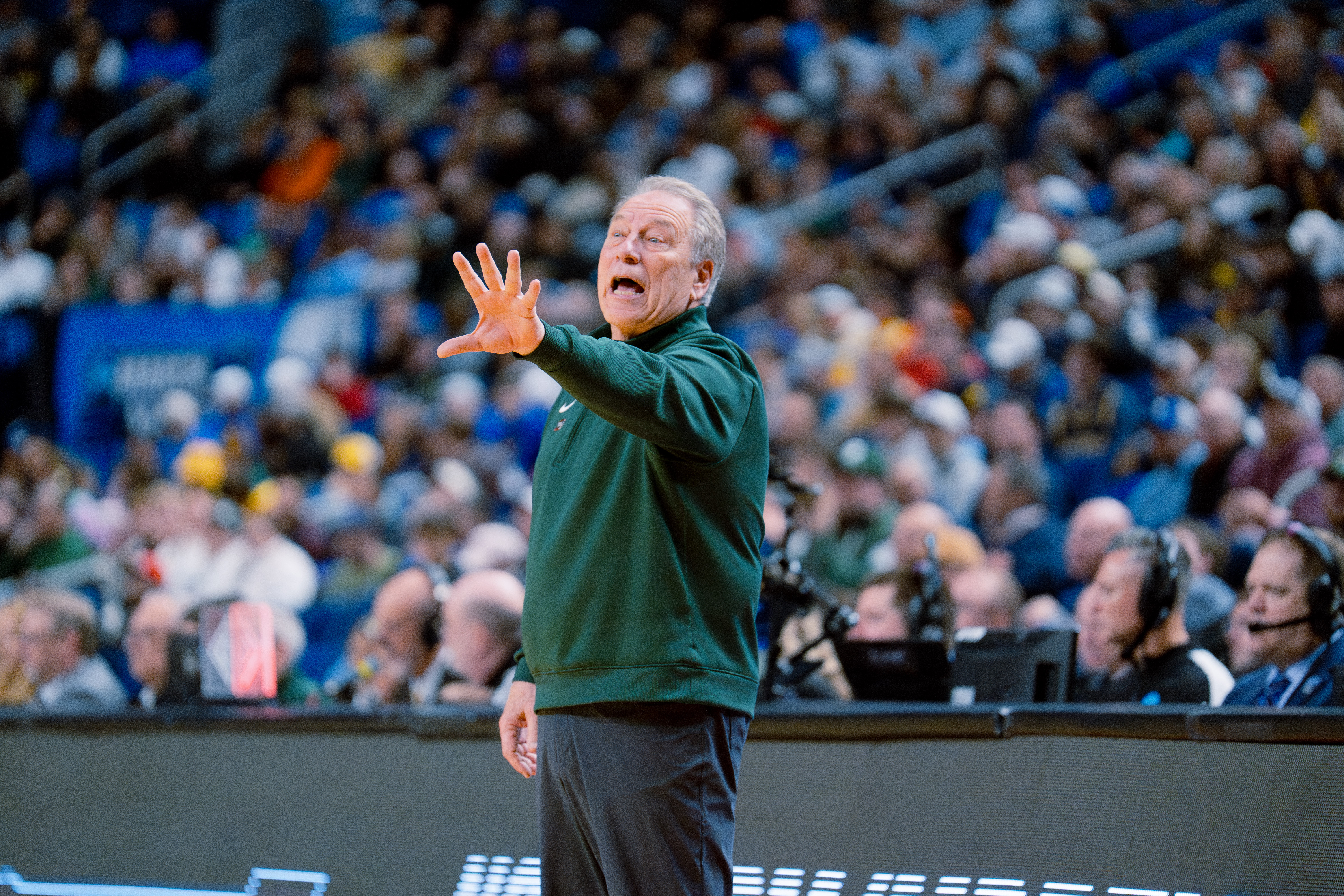
Izzo pulled back the curtain on what the modern college basketball offseason actually looks like
What emerged was not a complaint as much as a detailed explanation of a system he believes very few people truly understand
Speaking Tuesday, March 31, during an interview with WILX’s Tim Staudt, Izzo pulled back the curtain on what the modern college basketball offseason actually looks like from inside a program that is trying to hold onto its core while the sport around it shifts by the day.
What emerged was not a complaint as much as a detailed explanation of a system he believes very few people truly understand, even as they react to it in real time.
Izzo had just come out of a full round of individual meetings with his players, the first phase of what has become an annual process that now begins almost immediately after the season ends. Those conversations, he said, were encouraging. There was alignment. There were players who wanted to return, who believed there was more to accomplish, who saw value in staying where they were.
But Izzo did not present those meetings as resolution. He presented them as a starting point.
Because what happens inside a program, he made clear, is only one layer of a much larger and far less controlled environment.
Even with the transfer portal not officially opening for another week, Izzo described a landscape where movement has effectively been ongoing for months. Third parties reach out. Agents insert themselves into conversations. Programs are linked to players they have never contacted, sometimes without even knowing those players are being told Michigan State has interest.
In that environment, the idea of a defined “portal window” feels almost artificial.
That is where Izzo’s frustration sharpens, not just with the mechanics of roster movement, but with how little of it is actually visible. When asked what he would change if given the authority, he did not start with rules or restrictions. He started with transparency.