INTERVIEW: Max Bullough’s path back to Michigan State comes with a coach’s resume, alignment, and intent
Bullough returns to Michigan State with experience, a clear vision, and a commitment to building a team grounded in alignment, culture, and accountability
Before Max Bullough talks about Michigan State, or family legacy, or the idea of coming home, he stops on one point — and he insists on getting it right.
Despite the co-defensive coordinator title attached to his return, Bullough is unequivocal about where authority resides.
“I want to be very clear about this,” he said in a Friday interview with Jack Ebling on The Drive with Jack. “This is Coach Rossi’s defense. Coach Rossi is the defensive coordinator. He’s going to call the defense. This is his system.”
Bullough doesn’t hedge, soften, or qualify the statement. There is no ambiguity in how he views the structure of Michigan State’s staff or his place within it.
“I’m coming in to learn the defense as the linebackers coach,” Bullough says. “This isn’t a situation where we’re getting together to figure out what the defense is going to be. Coach Rossi has earned his stripes. He’s coached a lot of football. He’s a really sharp guy.”
That clarity is not accidental. Bullough has lived through enough elite football environments to know how quickly things unravel when titles blur responsibility or egos get ahead of trust.
“In no way is this about me coming in and changing things,” he says. “I owe it to him to come in here and learn from him.”
Bullough is comfortable saying that out loud — even insistent on it — because he understands how credibility is built inside a defensive room. It starts with respect. It starts with listening. And it starts with understanding that contribution does not require control.
“Will I teach a technique here or there? Yeah,” he says. “Will I have ideas as we go? Of course. That’s part of coaching. But this is Coach Rossi’s defense.”
That mindset has been shaped over years spent around coaches who demanded alignment as much as innovation. At Alabama under Nick Saban, Bullough learned how consistency and structure create freedom rather than limit it. In the NFL, he saw how clearly defined roles allowed players to play faster and coaches to teach with authority. At Notre Dame, he watched how trust — once established — amplified everyone’s voice instead of competing with it.
“You see staffs fall apart when people don’t know where they fit,” Bullough says. “And you see great ones succeed when everyone understands their role and embraces it.”
For Bullough, the co-coordinator title is not about leverage or hierarchy. It’s about responsibility, growth, and future preparation — a recognition of experience rather than a challenge to authority.
“It’s not about calling plays," he said plainly. "It’s about learning, contributing, and doing the job the right way.”
Only after setting that foundation does Bullough allow the conversation to widen — to Michigan State’s identity, to culture, to the long view of what the program can become.
When Max Bullough talks about Michigan State, it is never abstract. It is never nostalgia for nostalgia’s sake. It is lineage, responsibility, and unfinished work — all rolled into one.
That perspective matters now more than ever, because Bullough isn’t returning to East Lansing as a former captain reliving old memories. He’s coming back as Michigan State’s linebackers coach and co-defensive coordinator, stepping onto Pat Fitzgerald’s first Spartan staff with a résumé shaped by some of the most demanding football environments in the sport.
For Michigan State, it feels less like a hire and more like a reconnection.
Bullough’s name has long been woven into the fabric of Big Ten football. His grandfather, father, uncles, Chuck, and multiple family members carried the legacy forward. Max added his own chapter as a captain of the Spartan team that went to the Rose Bowl under Mark Dantonio.
But Bullough is quick to steer the conversation away from bloodlines and toward craft.
“I’ve been fortunate,” he says, repeating it not as a cliché, but as a grounding truth.
Fortunate to play championship football.
Fortunate to learn under elite coaches.
Fortunate to see the sport from every angle — college star, NFL starter, graduate assistant, position coach — before returning home.
Those experiences form the real foundation of his return.
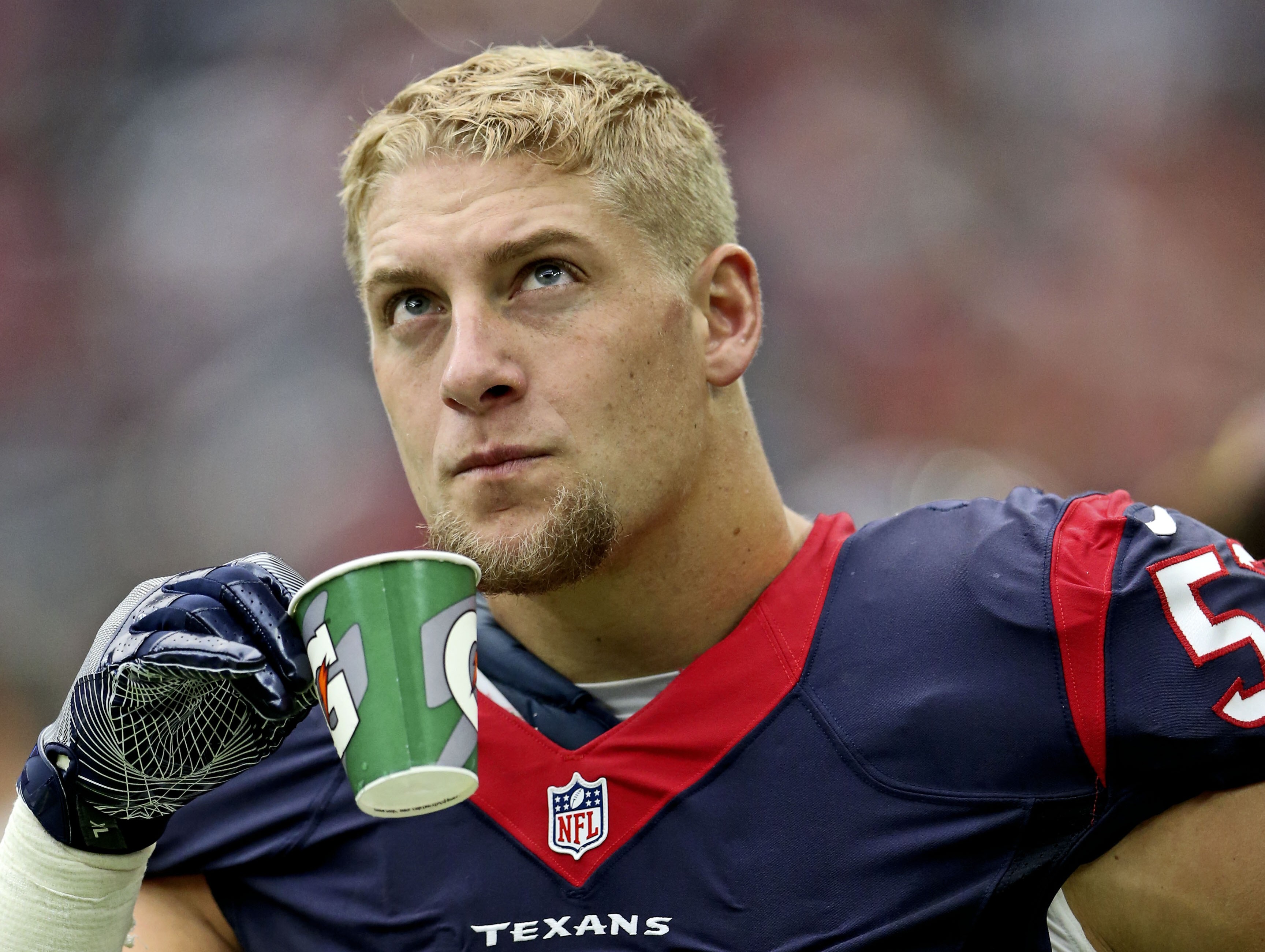
Bullough’s coaching journey began not with ambition, but with realization. In Houston, as an inside linebacker in a 3–4 defense, he spent three and a half seasons learning under Mike Vrabel, then the Texans’ linebackers coach. Inside and outside linebackers met together. Responsibilities overlapped. Football IQ was non-negotiable.
That’s where Bullough first saw himself as a coach.
“(He) was the first guy I looked at and thought, ‘I could do that,’” Bullough says. “The way he taught. The way he carried himself. It made sense to me.”
Vrabel once called Bullough the smartest player on the team — someone who could coach any position because he understood the entire defense, not just his assignment.
That philosophy still defines Bullough’s approach.
For him, linebackers aren’t specialists operating in isolation. They’re the connective tissue of the defense.
“If you want to play fast, you have to know the whole picture,” he explains. “Where everyone fits. Why the call exists. That’s how my mind works.”
From the NFL, Bullough moved into coaching — first under Bill O’Brien, who gave him his initial opportunity and remains a trusted voice, then into the crucible of Nick Saban’s Alabama program. There, Bullough learned consistency at its most relentless.
Saban, he says, was exactly what the public sees — and also not at all what people expect.
“If you win, he’s harder on you. If you lose, he builds you back up,” Bullough says. “It was always process over results.”
Every day looked the same. Same arrival time. Same expectations. Same accountability. Alabama’s true edge, Bullough says, wasn’t talent alone — it was total alignment.
“Everybody at that place was shooting for the same scoreboard,” he says. “That’s rare.”
His most recent stop, Notre Dame, added a different layer. Under Marcus Freeman, Bullough saw leadership expressed daily — direct communication, consistency, and an emphasis on people as much as players. At Notre Dame, recruiting wasn’t just about measurables. It was about mental makeup, maturity, and fit.
“That part gets lost sometimes,” Bullough says. “You need the physical traits. But you also need the right person.”
That belief carries directly into how he views Michigan State.
When Bullough talks about rebuilding the Spartans, he doesn’t reach for slogans. He talks about people. Culture. Alignment. The unglamorous work of creating a team that reflects the place it represents.
“Tough. Blue-collar. Punch-you-in-the-mouth football,” he says. “But it’s not the Spartan helmet that creates that. It’s the people inside the building.”
Under Fitzgerald — a coach Bullough didn’t know personally before the hire but heard universally praised — Bullough sees a familiar structure: strong central leadership, relentless energy, and consistency day after day.
“He’s a football guy,” Bullough says. “Natural. Steady. The same person every day. That matters.”
Bullough’s path has been shaped by mentors who valued preparation over spotlight and substance over status.
In quieter moments, Bullough allows himself to articulate the long view. Not wins or titles in isolation, but permanence.
“My goal,” he says, “is that when I die, anytime someone lists the top teams in the Big Ten, Michigan State comes out of their mouth.”
Not occasionally. Automatically.
It’s a simple sentence, but it carries the weight of generations — and the clarity of someone who understands how hard that standard is to maintain.
There’s one more historical footnote waiting in the margins. If Bullough helps Michigan State win a Big Ten championship, he would become the first grandson of a Big Ten champion player to coach one himself.
He didn’t know that when it was mentioned to him by Ebling in the podcast interview.
“That’s unbelievable,” he said, pausing. “That’s pretty cool.”
It would be fitting. But even without it, Max Bullough’s return feels complete — not as a homecoming tour, but as a continuation.
Bullough isn’t back for applause or nostalgia. He’s back for the grind, the culture, and the work that lasts long after headlines fade. Every lesson he’s learned, every coach he’s studied, every game he’s played has led him here: to build, to teach, and to contribute in a way that honors both the past and the future of Michigan State football.
For Bullough, the next chapter isn’t about a name or a legacy; it’s about the team he helps shape and the standard he aims to leave behind.