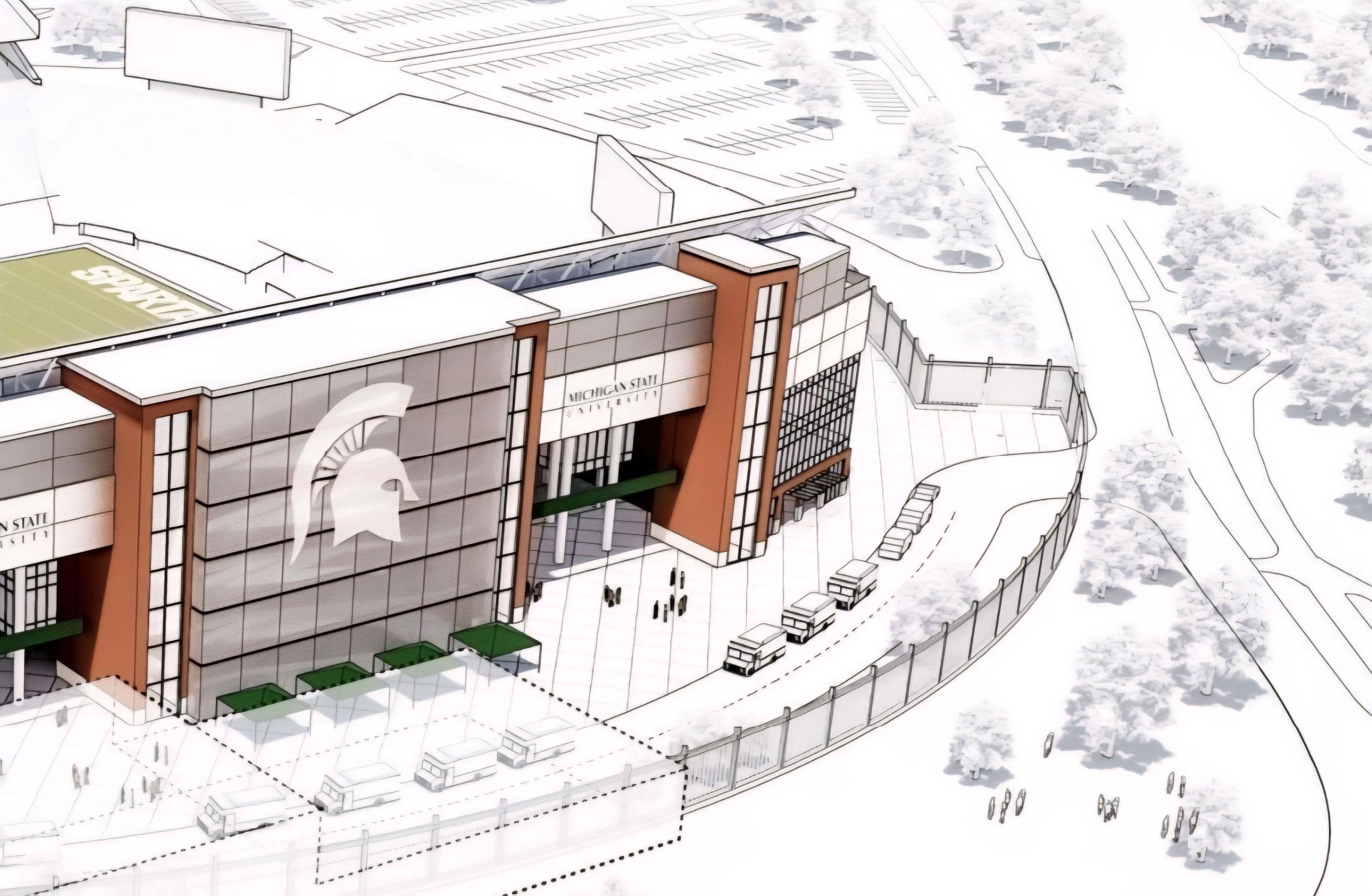
Inside Michigan State’s plan to rebuild Spartan Stadium’s east side
Here's what Michigan State is planning in its $500 million, multi-phase renovation - and why fans could see progress sooner than expected
For more than a century, Spartan Stadium has been the heart of Michigan State University – a place where student-athletes inspire collegiate pride on the gridiron, in the marching band, and along the sidelines as the crowd rises together. On fall Saturdays, tailgates spill outward from the stadium and across campus lawns, as families return year after year and generations of Spartans gather to share traditions and make memories.
Long before kickoff, the rituals begin. Grills are fired up. Stories are retold. Children are lifted onto shoulders. Friendships are renewed in the stadium’s shadow. The kids once racing across the grass and tossing footballs now arrive with their own children, hoisting the same colors, singing the same songs, and enjoying the same sense of belonging.
When it opened in 1923 as College Field, Spartan Stadium seated just 14,000 fans. Through expansions layered across decades, it grew into a 75,005-seat landmark that has hosted not only games, but reunions, milestones, and moments passed down from one generation to the next.
Few structures on campus carry as much shared history – or as much emotional weight.
Now, Michigan State is preparing for the most consequential chapter in that story: a comprehensive east side modernization designed not merely to repair or refresh Spartan Stadium, but to fundamentally reposition it for its second century.
A moment shaped by necessity – and opportunity
The Spartan Stadium East Side Modernization Project is envisioned as a $500 million, multi-year renovation and new construction effort led by MSU Athletics.
The project’s origins trace back to a 2022 facilities study that delivered a blunt conclusion: Michigan State’s athletic facilities were falling behind those of its peers in the Power 4 conferences. The gap was not cosmetic. It showed up in infrastructure capacity, accessibility, premium inventory, media capabilities, and the overall fan experience.
For a program that competes nationally – and relies on football as both a cultural anchor and a financial engine – that gap was unsustainable. The east side modernization is the university’s answer: a reinvestment that addresses long-standing deficiencies while reshaping how fans, donors, partners, and even the broader campus interact with Spartan Stadium.
Rebuilding the east side from the inside out
At the heart of the project is a complete reimagining of the stadium’s east side.
Phase 1, the most substantial and visible portion of the work, focuses on premium seating, fan amenities, accessibility, and circulation – the areas where the stadium’s age is felt most acutely on game days.
Both the upper and lower east bowl seating areas will be upgraded, improving comfort while expanding ADA access. Additional accessibility improvements extend into the north and south bowls, reflecting a campus-wide commitment to making Spartan Stadium welcoming and navigable for all fans.
But the most transformative change may be the concourses themselves.
Subscribe to Spartans Illustrated to read about the upcoming timeline, phases two through five, the premium seating areas, possible space for the Department of Kinesiology, event spaces available for more than just game day, an interesting material choice to be used, and more.