Breaking down Michigan State’s 2026 football season ticket and parking changes
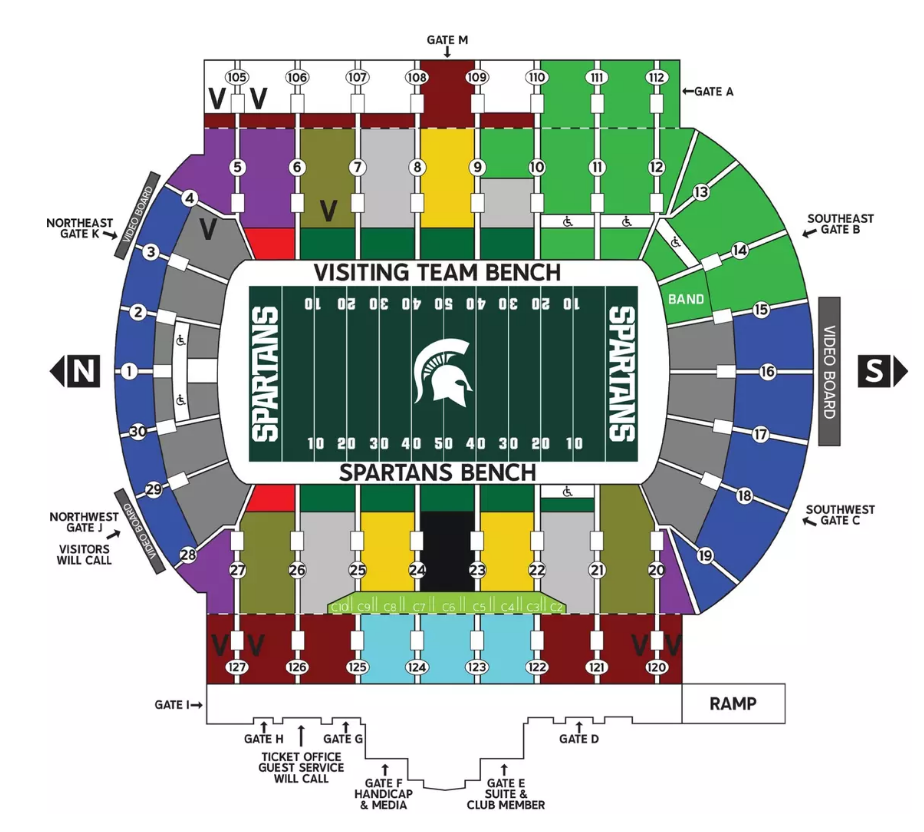
Why some seats got cheaper, others got more expensive, and what it reveals about MSU’s priorities
Last season, a family of four that wanted to attend Spartan football games faced a tradeoff: pay roughly $1,540 for four season tickets, or gamble on the secondary market — where cheaper seats might appear for some games, but marquee matchups were often out of reach. Under Michigan State’s updated season ticket model, that same family can attend all seven home games this fall for about $980, illustrating a broader shift in how the department is pricing access to Spartan football.
That example sits at the center of a larger set of changes Michigan State Athletics announced this week. Football season ticket renewals for the 2026 season will open January 28, accompanied by updates to pricing, ticket delivery, payment options, and parking policies. Read quickly, the release looks like a routine offseason update. Looked at more closely, it reflects a deliberate reset by the Michigan State University athletics leadership team in how it thinks about attendance, loyalty, and value.
The organizing principle behind the plan is straightforward: it is better to have Spartan Stadium full every week than to chase maximum revenue on a per-ticket basis. The department is clearly prioritizing season ticket commitment over single-game convenience, with the goal of creating a consistent home-field advantage and re-establishing attendance as a habit rather than a series of one-off decisions.
What’s behind the paywall—and why it matters
Past this point, we dig into how Michigan State is actually executing this shift — not just what was announced. That includes a clear breakdown of the new pricing tiers, why some seats went up while others dropped, and how the model is designed to reward long-term season ticket holders at every price point.
We also walk through the parking changes in detail, explain what the new “one pass per four tickets” rule is really meant to do, and outline how donor priority, flexibility, and premium single-game options fit together. If you’re trying to understand where you fit in the new system — or how MSU is shaping fan behavior rather than just selling tickets — this is where that picture comes into focus.
A subscription supports independent, Michigan State–focused reporting that goes beyond press releases and into the reasoning behind the decisions. If you care about access, value, and the long-term health of Spartan football, the analysis past the paywall is written for you.